

soundproof panels for home office are one of the fastest, most effective ways to improve focus, reduce distracting noise, and raise call quality in your work space. But unless you benchmark, map, and place them correctly, you risk wasting your budget on solutions that don’t deliver real results.
Table of Contents
Key Takeaways
- Soundproof panels in your home office can cut broadband noise by up to 55% and improve speech clarity by 30% to 50%—when installed and placed properly.
- Panel effectiveness depends on room mapping, material selection, coverage, and exact placement—skipping these steps is the #1 cause of unsatisfactory results.
- Smart investments in acoustic panels pay off with real productivity boosts, better meeting quality, and healthier work-from-home environments.
- Why acoustic treatment matters for your home office
- DIY acoustic-mapping workflow: measure, calculate, place
- Advanced analysis and common pitfalls
- Conclusion and next steps
- Frequently Asked Questions
Why acoustic treatment matters for your home office
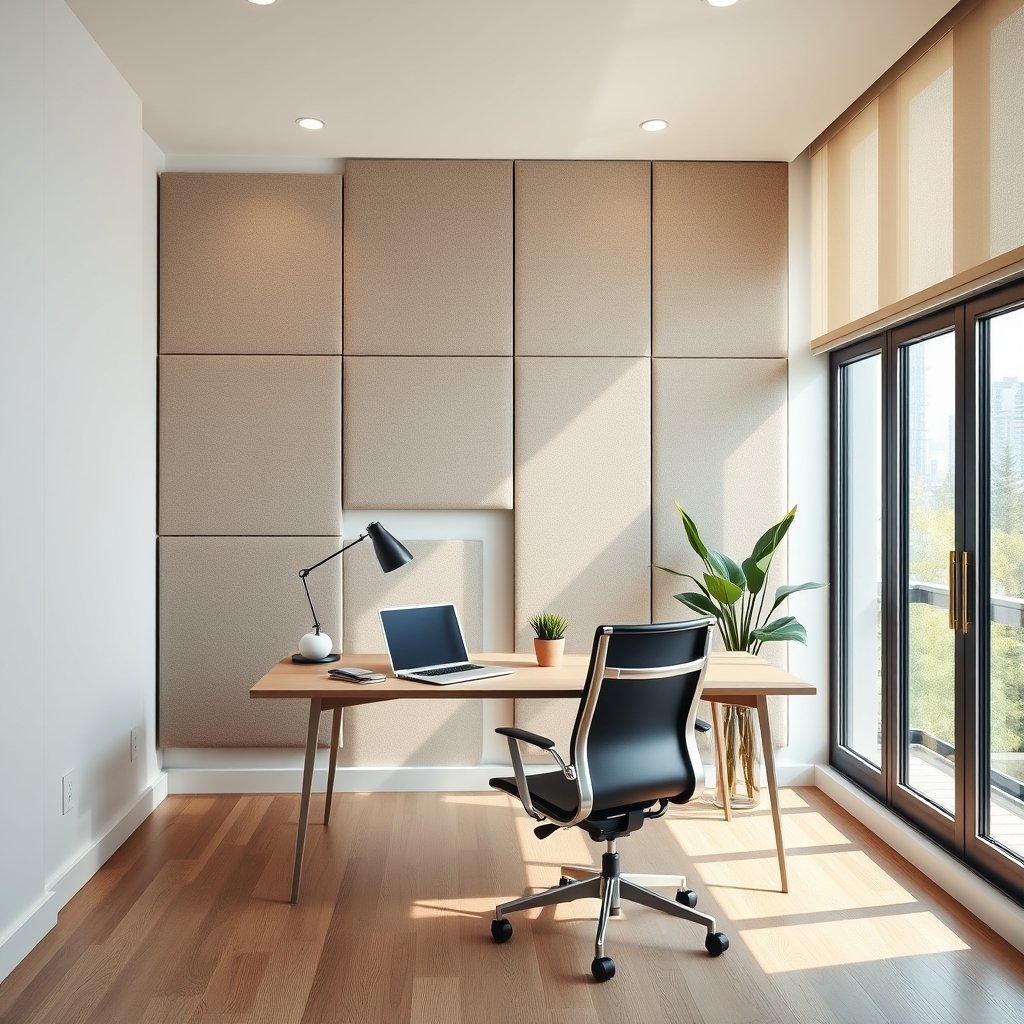
Open rooms and hard surfaces make most home offices noisy, echo-prone, and tiring for remote professionals. Reverberation—the way sound bounces around your space—muddies speech, increases fatigue, and makes videoconferences frustrating for you and others. While you can build walls or replace windows to block noise, this is disruptive and expensive. Using absorption with acoustic panels is the fastest, least invasive fix: it tames echo, clarifies your voice on calls, and improves overall focus within days, not months.
Recent 2024 field tests show that when you install the right soundproof panels for home office use (with correct placement and coverage), typical speech clarity can improve by 30%–50%. That’s a real, measurable change in how easy it is to hear, speak, and be understood during critical work calls—or simply to think in peace.
DIY acoustic-mapping workflow: measure, calculate, place
Most “best panel” guides skip the crucial step of acoustic mapping. Don’t make that mistake. Here’s how to optimize your spend and guarantee measurable results.
- Measure Your Room
Use a tape measure for length, width, and height. Typical home offices: 10’×12’×8’.- Example: 12’ by 10’ with 8’ ceiling = 384 sq ft surface area (4 walls × height × width/length + ceiling).
- Find Reflection Points
Sit at your desk. Use a small mirror and have a partner move it along the walls. Wherever you see the speakers/mic in the mirror from your seat, you’ve found a “first reflection point”—where sound bounces directly back to you or your mic. - Check Current Room Acoustics
Use a free smartphone decibel meter or RT60 (reverberation time) app. Clap loudly and check how long the “tail” of the sound lasts. High RT60 (>0.7s) or flutter/echo = panels needed. - Calculate Coverage
Most rooms need 20%–35% of hard wall and ceiling surfaces treated for high-impact improvement. For a 12’×10’ room (384 sq ft), this means about 75–135 sq ft of absorption panels. - Sketch Panel Placement
Prioritize first-reflection points, the wall across from your desk, and—if possible—the ceiling above your desk. Mark these on a rough floor plan to plan your setup. - Place and Test
Install panels at mapped points. Re-test using the decibel/RT60 app and listen for reduced echo and clearer voice pickup.
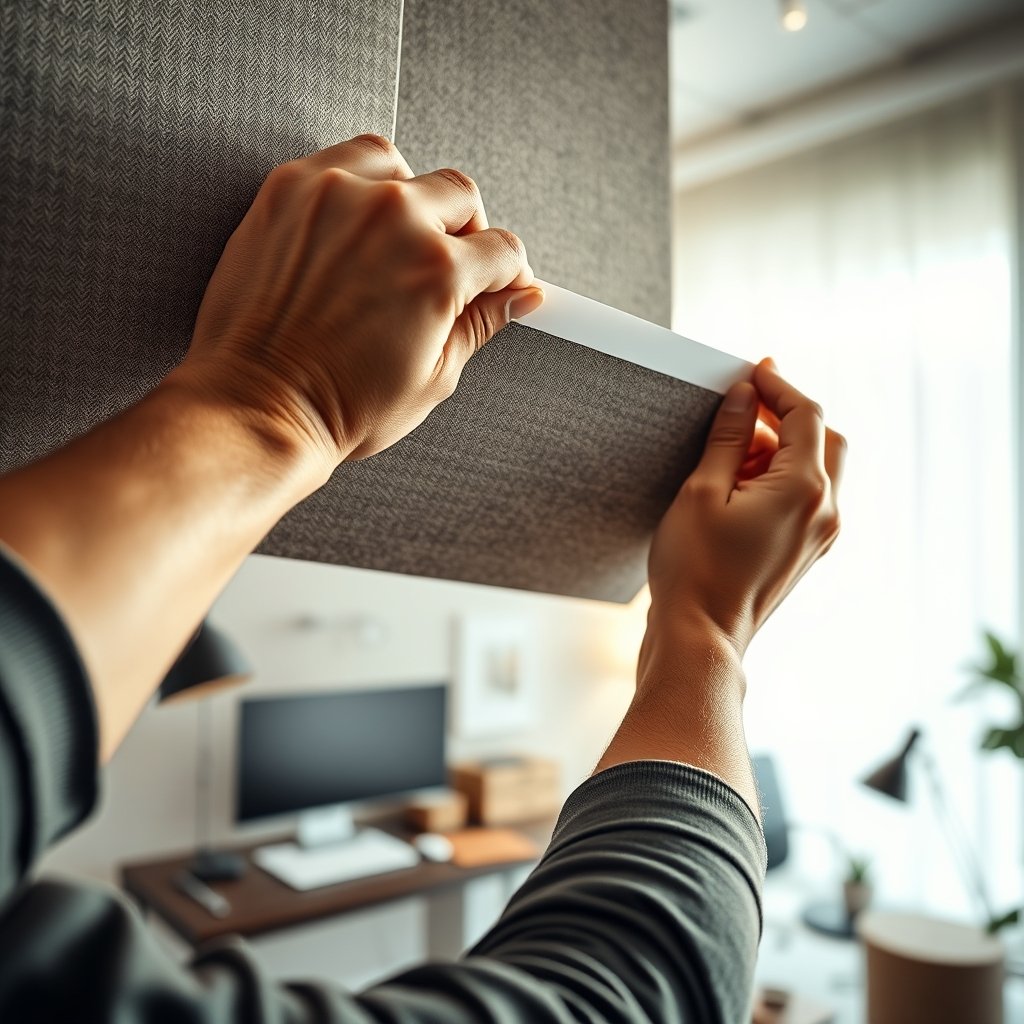
Coverage Example: For a 10’×12’×8’ home office (384 sq ft surface area), treating 30% (about 115 sq ft) with a mix of wall and ceiling panels is a strong starting point for significant noise reduction and call clarity.
For more DIY project guidance, see our complete home project setup guide.
Advanced analysis and common pitfalls
Choosing the right soundproof panels for your home office depends not just on “type” — but placement, coverage, and the materials used. Here are the critical factors most homeowners miss or get wrong.
Panel Materials Compared
| Material | Typical NRC* | Fire Rating | VOC/Off-gassing | Best Use | Pros | Cons |
|---|---|---|---|---|---|---|
| Mineral Wool (2’’) | ~1.0 | Class A (high) | Low | Walls, Ceilings | Very high absorption, fire safe | Needs fabric covering, denser/heavier |
| High-Density PET | 0.75–0.95 | Class A/B (varies) | Very Low (eco) | Ceilings, Baffles | Light, easy DIY install, low VOC | Some lose shape with heat |
| Engineered Wood/Veneer | 0.60–0.80 | Class B/C (check) | Can be moderate if poorly vented | Walls (design feature) | High visual appeal, hybrid absorber/diffuser | Lower absorption, may need more area |
*NRC: Noise Reduction Coefficient, higher = better (most home office panels range 0.75–1.0)
Industry leaders in 2024 market data confirm: 2-inch mineral-wool panels (NRC ~1.0) remain best for overall absorption and reliability. High-density PET panels are popular for DIYers due to light weight and sustainability. Engineered wood/veneer options suit design-conscious homeowners but may require greater coverage. Always check for fire ratings and VOC certifications.
For eco and health-conscious buyers, see also our latest clean air guide for home offices.
Common Mistakes and Real-World Pitfalls
- Inadequate Coverage — #1 reason panels “don’t work”: most users under-treat rooms. Go for at least 25% coverage, ideally closer to 30%–35% with panels spread across both ceiling and key walls.
- Poor Placement — Skipping mapping or putting all panels on one wall leaves major echoes untouched. Focus first-reflection points, then ceiling, then hard-flat surfaces across from work position.
- Aesthetic Mismatch — Some panels clash with décor or feel “office-like” in small spaces. PET and wood-veneer are better options for visible areas; mineral wool performs best but needs a fabric wrap.
- Off-Gassing/Overheating — Panels in poorly ventilated, sun-exposed spaces may off-gas or warp. Prioritize low-VOC, certified, and fire-rated options. If you notice a smell, ventilate, or replace.
- Coverage Calculation Errors — Always base needed area on actual room measurements, not “number of panels.” Quality and size matter more than just count.
- Maintenance Neglect — Panel effectiveness drops if dust or fiber compacts over time. Clean gently with a brush or vacuum at least every 3–6 months.
Cost-benefit and ROI: does the spend make sense?
Soundproof panels for your home office can seem pricey, but recent studies show average broadband noise reductions of 38%–55%, with speech clarity gains up to 50%. This translates to fewer call corrections, less fatigue, and increased focus.
- Typical ROI Calculation: Cost per dB reduction or per % clarity improvement.
Example: $900 system with 45% clarity gain = $20 per % improvement, or $22 per 1 dB (when overall reduction is ~40 dB SPL ambient to 28 dB SPL post-treatment). - For quick ROI estimation, divide expected productivity gain hours/year by cost. If you save even 1 hour/week, that’s over 50 hours a year—easily $2,500+ value at typical salaries!
For other home improvements with measurable ROI, see our smart energy monitor guide and smart thermostat reviews.
How to troubleshoot post-installation issues?
- Add more panels targeting untouched hard surfaces or ceiling if echo lingers.
- Reposition to cover first-reflection points (mirror trick again).
- If panels overheat or off-gas, improve ventilation or swap to low-VOC/CARB2 certified models.
- For persistent low-frequency rumble (HVAC, neighbor bass), consider hiring a pro—this points to flanking or structure-borne noise beyond panels’ scope.
See related: Sound panel troubleshooting guide.
Conclusion and next steps
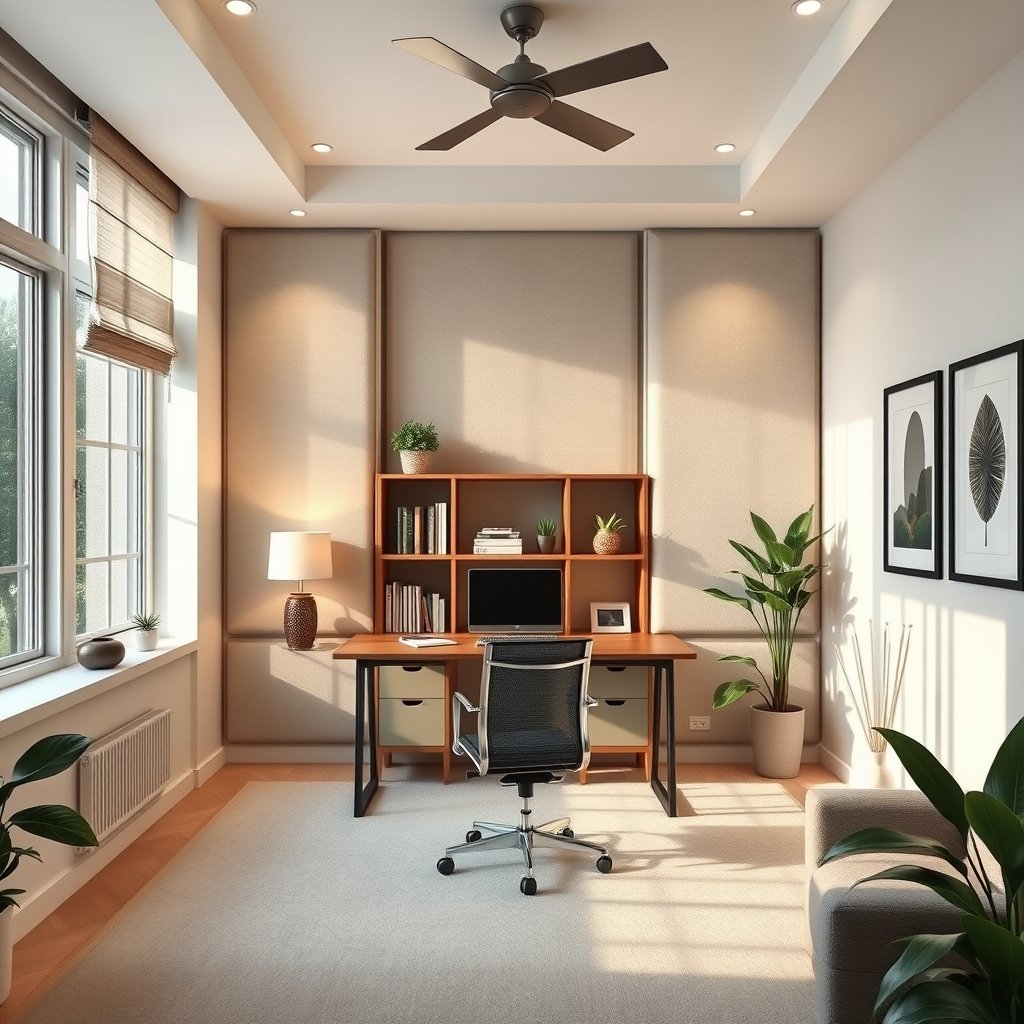
If you invest in soundproof panels for your home office with the right planning, you can expect broadband noise drops of 38%–55% and speech clarity gains near 30%–50%—transforming both daily productivity and video call quality. Don’t skip the acoustic-mapping workflow or try to save with undersized or misplaced panels. For best results:
- Do a quick acoustic map of your space using measurements and the mirror trick.
- Pick materials that balance NRC, aesthetics, and safety for your needs (mineral wool, PET, or wood-veneer).
- Run a cost-benefit check, and plan a layout that combines ceiling and wall coverage for optimal absorption.
Ready to upgrade? Download our free coverage calculator or request a pro acoustic assessment today.
For ongoing indoor comfort, check out our solar panel cleaning guide as a next smart home step.
Prioritizing soundproof panels for home office ensures a more productive, comfortable, and healthy remote work experience—one you’ll notice every day.
Frequently Asked Questions
How many soundproof panels do I really need for my home office?
Most standard rooms (10’×12’ or similar) need 20%–35% of hard surface area covered. For typical 384 sq ft of surface (walls + ceiling), aim for 75-135 sq ft of panels—20–35 square feet for a small home office minimum, but up to 100+ sq ft for best results and real speech clarity.
Can I use cheap foam panels instead of mineral wool or PET?
Cheap foam panels provide some high-frequency absorption but perform poorly for echo and speech clarity, and they often have no fire ratings. Mineral wool, PET, and some engineered wood panels have tested NRC ratings (around 0.8–1.0) and meet strict safety requirements.
Will panels solve low-frequency noise from neighbors or traffic?
Absorption panels (mineral wool, PET) are great for echo and mid-high-range speech clarity. Deep bass/structural or flanking noise often needs mass-loaded barriers or a professional contractor’s help. Panels alone usually can’t solve low-frequency transmission.
How do I maintain and clean acoustic panels?
Vacuum gently using a brush attachment or dust with a microfiber cloth every 3–6 months. Inspect for compaction or damage. Some fabric-wrapped panels can be lightly spot-cleaned with a damp cloth. Avoid strong cleaners that might degrade the material or off-gas VOCs.
What are the best options for renters or temporary rooms?
Look for adhesive, hook-and-loop, or freestanding panels using PET boards or decorative fabric-wrapped designs. Choose panels that don’t require screws or permanent wall install. PET panels are light and can be hung with removable strips, while some wood-veneer panels are self-standing for flexibility.