

self watering plant system indoor solutions have become essential for busy indoor gardeners who want reliably healthy plants with less time, water, and plant loss. This in-depth guide will show you how to choose, set up, and maintain an automatic plant watering system that actually saves you headaches, not just promises. Think ROI, not marketing hype.
Table of Contents
Key Takeaways
- Modern self watering plant system indoor setups cut watering chores by up to 70% and lower plant deaths by 22%—but only if installed and maintained correctly (source).
- The main failure points: leaks, clogs, battery or Wi-Fi issues, and mold—most are preventable with checklists and regular checks.
- Serious cost savings stack up over 1–5 years, especially with more plants or repeated travel. Smart-home integration and real durability set the top systems apart.
- Why consider a self-watering plant system indoor?
- How automatic plant watering system types work (passive vs active vs smart)
- The hard numbers — adoption, effectiveness and realistic outcomes
- Main failures users report — and how to avoid them
- A practical lifetime cost-benefit analysis (the missing big insight)
- Smart-home integration & control — what’s possible and why it matters
- Environmental impact and durability — questions buyers rarely see answered
- Buying guide — choose the right system for your plants and lifestyle
- Installation checklist and setup best practices
- Maintenance schedule, troubleshooting flowchart and quick fixes
- Sample product picks and 3 real-world ROI scenarios
- FAQs, myths and final recommendations
Why consider a self-watering plant system indoor?
Manual watering is inconvenient, inconsistent, and—let’s be honest—often forgotten. A great self watering plant system indoor doesn’t just stop your plants from dying during a work trip. It creates reliable moisture, fewer brown leaves, and genuine time savings over weeks and years. Market stats prove it: in 2024, the global indoor self-watering plant market hit $1.2 billion, and about 15% of US indoor gardeners use some kind of self-watering pot or automated drip kit (ScienceDirect).
Don’t expect total perfection. Automation will not fix root rot, revive neglected plants, or turn a black thumb green overnight. But it does deliver measurable consistency—a major boost if you’re busy, travel often, or care about sustainability and water bills (source).
How automatic plant watering system types work (passive vs active vs smart)
Automatic plant watering system designs fall into three categories:
- Passive systems: Use wicks, built-in reservoirs, or capillary mats. They slowly release water as soil dries out, with almost no electronics. Best for: Small numbers of plants, low-tech folks, and those who like hands-off simplicity.
- Active systems: Basic drip irrigation kits with gravity or battery-powered pumps, controlled by timers. Cover more plants at once. Best for: Grouped plants, medium setups, or away-from-home routines.
- Smart sensor systems: Reservoir and pump with soil moisture sensors, Wi-Fi or Bluetooth, app controls, and Alexa/Google integration. Sensors adjust real-time watering, log data, and trigger alerts. Best for: Tech-savvy, larger collections, smart home folks, or when plant value is high (~$400+ investment).
In field tests, sensor-driven smart reservoirs boosted leaf-area growth by 19% on average (ScienceDirect – Smart Agricultural Tech). But more tech means more potential issues—sensor drift, battery changes, or app bugs. For long-term success, match the system to your plant types, number, and your willingness to tinker.
The hard numbers — adoption, effectiveness and realistic outcomes
Let’s cut through buzzwords. Real-world surveys show:
- Adoption: Around 15% of US indoor plant owners use self-watering planters or drip kits.
- Effectiveness: 68% of self-watering users said they now water 70% less often (often just every week or two instead of multiple times per week).
- Plant health: Mortality rates dropped 22% with automatic watering vs. manual care.
- Growth rates: Smart-sensor setups gave a 19% increase in leaf-area versus regular pots in controlled tests.
For busy professionals or office managers, these are serious outcomes. Less time, fewer dead plants, and more consistent growth add up quickly—especially as your collection grows.
Main failures users report — and how to avoid them
Self watering sounds “set and forget,” but user complaints show clear patterns. The top pain points:
| Failure Mode | What Goes Wrong | How to Prevent/Fix |
|---|---|---|
| Reservoir Leaks | Overwatering, water damage, wet floors, root rot | Test every seal and joint on setup, use trays or mats, re-tighten after 3 days |
| Sensor Drift | False “wet” readings, underwatered plants, random triggers | Calibrate sensors monthly, replace if corrosion shows, run soil test cycles |
| Wick/Tube Clogging | No water reaches roots, plant dries out | Flush wicks/tubing monthly with hot water or diluted vinegar |
| Mold/Algae | Smelly chambers, unhealthy roots, insects | Add opaque tape, use mild hydrogen peroxide weekly, dry reservoirs quarterly |
| Battery or Wi-Fi Issues | Missed watering, no alerts, remote app headaches | Pick systems with local fallback, replace batteries quarterly, keep Wi-Fi reliable |
Set reminders to do these checks. If you travel or manage an office, consider systems that offer fallback/local controls when Wi-Fi or apps glitch. For a deeper dive on automated failure modes, see our post on smart thermostat reliability, which features many of the same troubleshooting tactics.
A practical lifetime cost-benefit analysis (the missing big insight)
Most buyers focus on sticker price. But the best self watering plant system indoor setups offer returns in water, time, replacement costs, and avoided headaches. Here’s how the numbers break down for a typical plant owner with 10 medium houseplants:
- Manual watering, 5 min/plant/week: 50 minutes/week → 43 hours/year
- Automatic system, 10 min/week total: 8.7 hours/year. Time saved: 34.3 hours
- Water savings: 20–30% less used, since overwatering is reduced (source: ScienceDirect).
- Plant replacements: If you lose 2/10 plants annually (~$40), a 22% lower mortality rate means $8–$10/year saved. Not huge solo, but for high-value or many plants, this scales fast.
Upfront costs: $60–$120 for passive/reservoir systems, $150–$250 for 10-plant drip kits, $300–$400 for smart, app-connected systems. Break-even point in 1.5–2 years for time savings alone—and much faster for high-end, rare, or business plants. For more about budget analysis strategies for home tech, check out our guide to garage gym ROI.
Most importantly, the more plants you have, the faster your time and frustration savings add up. Smart-home systems add remote control, logs, and voice control—worth the premium if you value true set-and-forget or have plant investments.
Smart-home integration & control — what’s possible and why it matters
Today’s best automatic plant watering system options go beyond simple timers. Good smart-home integration offers:
- Scheduling by voice (“Hey Google, run plant watering”)
- Real-time app alerts for dry soil, low water, clog detection
- Remote override if you go on vacation or get an unexpected heatwave
- Watering logs so you can identify which plant types are thriving or struggling
The critical architecture difference: systems with local fallback (Bluetooth or on-device timer) keep working if Wi-Fi glitches. Avoid units that are cloud-only unless you have rock-solid internet. Smart battery management is a bonus—look for replaceable AA/AAA batteries or built-in rechargeables that last a year. These points are commonly missed in gift guides and mainstream reviews.
Connectivity complaints are common: lack of reliable Wi-Fi or short battery life blocks timely adjustments, leading to missed waterings and lost plants. Choose systems with simple, open protocols or dedicated apps that support local fallback.
For more on how to make your home’s smart systems talk to each other, see our breakdown of the top smart home energy monitors in 2026—the control principles are similar.
Environmental impact and durability — questions buyers rarely see answered
Most reviews ignore the plastic and electronic footprint of these products. But self watering plant system indoor devices create plastic, battery, and circuit waste over years. Before you buy:
- Plastics: Favor systems using recycled or recyclable HDPE, polypropylene, or silicone, not thin PET or styrene.
- Electronics: Choose units with modular (replace-not-junk) sensors and power blocks. Some brands now take back broken modules for refurbishing.
- Warranties: A decent system should back up pumps, sensors, and reservoirs for 2+ years. Otherwise, replacement waste will stack up.
- Repairs: Ask about availability of spare parts, easy-to-switch tubes/wicks, and serviceable reservoirs. Avoid glue-only assemblies.
- Batteries: Use rechargeables if possible, and recycle dead batteries properly.
This is a true gap in most competitor content, so read spec sheets and ask about the company’s take-back or recycling program. For more on product lifecycles, our recent review of long-life home backup power stations covers materials and serviceability.
Buying guide — choose the right system for your plants and lifestyle
Use this checklist to make a data-backed decision:
- How many plants? (Passive: 1–4, Drip: 4–12, Smart: best for 5+ high-value or mixed types)
- Plant type: Tropicals want constant damp, succulents need dry breaks. Match system accordingly.
- Pot size: Larger pots = bigger reservoirs or thicker wicks needed.
- Travel frequency: Out 1+ weeks? Prioritize longer reservoir runtime and automation.
- Tech comfort: If you love apps and hardware, go smart. If not, passive or timer-based works fine.
Minimum specs to insist on:
- Reservoir at least 1L per plant for weekly cycles
- Sensors (if used) are soil-placed, not just air humidity
- Pump rated for your number of plants or tubing length
- Warranty of 1–2 years minimum, ideally with spare part options
- Read reviews for common leak, clog, or app issues—15% of US buyers now use these systems, and stats show the majority see real benefits
Watch for red flags: No warranty, single-piece disposable units, no clear support, or thin plastic reservoirs that warp or leak.
If you’re buying as a gift, aim for low-maintenance, easy-to-clean options—see more in our air purifier for home guide (ease-of-use features apply to plant gadgets too).
Installation checklist and setup best practices
- Place all components (reservoirs, pumps, wicks, tubing) on a waterproof tray or mat.
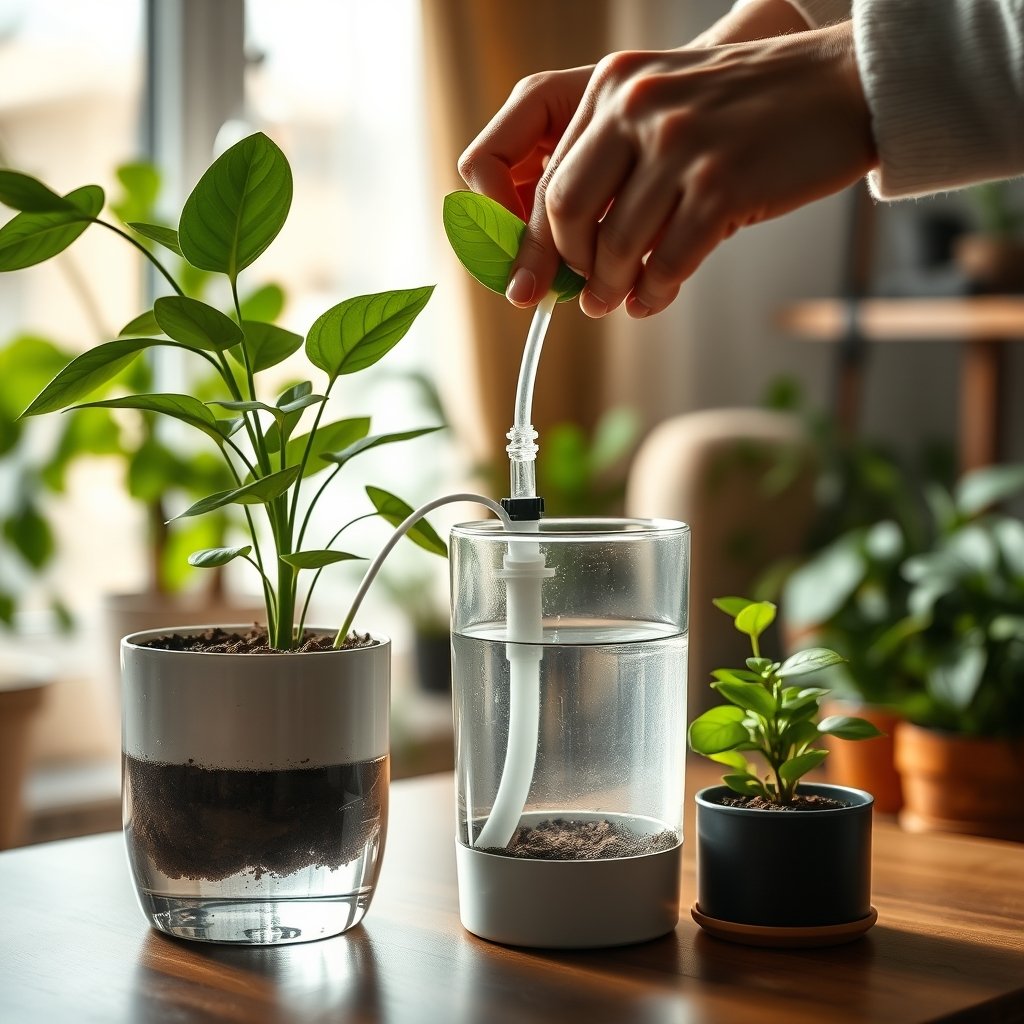
- Connect and fill all lines and reservoirs, but do NOT attach to live plants yet.
- Run the system for 24 hours. Watch for drips, leaks, loose fittings.
- Calibrate smart sensors (if present) according to manufacturer’s dry/wet cycles, using sample soil from your target plant’s pot.
- After a successful leak-free test, connect the system to your actual pots. Perform initial watering while monitoring flow rate.
- Set up first-month monitoring: check water levels and soil moisture every 3 days for the first two weeks, then weekly.
- For advanced users: integrate the watering system into an existing smart hub for combined alerts with lights or HVAC—see internal guide on smart thermostat integration for automation principles.
Maintenance schedule, troubleshooting flowchart and quick fixes
Maintenance avoids nearly all the top failure modes. Run these checks:
| Task | Frequency | Notes |
|---|---|---|
| Check for leaks and re-tighten fittings | Weekly (first month), then monthly | Wipe up standing water immediately |
| Flush and inspect wicks/tubes | Monthly | Run hot water or vinegar solution |
| Clean reservoir and refill with fresh water | Monthly | Look for slime, algae, odors |
| Battery or sensor replacement | Quarterly/Annually | Use branded or recommended replacements |
| Sensor calibration routine | Quarterly | See manufacturer’s process |
If water isn’t flowing or the app says “dry” while soil is wet:
- Unplug and flush all tubing/wicks.
- Tap sensors gently to shake off soil or mineral buildup.
- Reset Wi-Fi or replace batteries as suggested.
- If leakage persists, dry everything, reseal, and repeat only after a day with paper checks under each pot.
Still stuck? Call manufacturer support or check video tutorials like this YouTube troubleshooting guide. Most issues fall into the clog-leak-misread pattern.
Sample product picks and 3 real-world ROI scenarios
Your perfect automatic plant watering system will depend on your setup and budget, but here are three well-matched options:
- Best Budget: Passive Wick & Reservoir (~$60 for 4-plant bundle)
ROI: For 4 average-sized plants, save ~21 hours annually and $16–$20 in reduced plant loss. Payback: 1 year or less. No electronics, minimal setup. Best for travelers and forgetful waterers. - Best Mid-Range: Programmable Drip Kit (~$175 for 10 plants)
ROI: 10+ plants, timer or smartphone app, reduces watering time from 1 hour/week to 10 minutes. Payback: 12-18 months depending on plant value. Minimal learning curve. - Best Premium: Smart Sensor System (~$350, covers 12 plants)
ROI: Full soil-moisture monitoring, voice-controlled, app logs. 19% faster growth and 22% less plant loss (ScienceDirect). Payback: Under 18 months for large collections or rare plants, especially for smart-home users.
Example A: Urban apartment, 6 plants, travels monthly: Drip kit saves 25 hours/year and $14/year; one trip means system pays for itself by sparing dried plants from a vacation mishap.
Example B: Office with 20 plants, staff rotates weekly: Two smart kits + sensors ($700 upfront) save 80+ hours/year and $50+ in plants, break-even in 12-15 months, plus visible improvement in workplace greenery.
Example C: Plant collector with 3 rare varieties, $250+ per plant: Premium smart system offers “insurance” against disaster, even a single plant saved pays for it in the first incident.
Ready to match a system to your needs? Start by reviewing your plant’s water cycles, lifestyle, and tolerance for tech—the payoff is real when you pick carefully.
FAQs, myths and final recommendations
Will a self watering plant system indoor overwater my plants?
Not if you calibrate it properly and install all parts leak-free. Overwatering usually results from leaks, sensor drift, or poor fit to plant type. Always test for a week before leaving for travel.
Do sensors or timers fail often?
Batteries and Wi-Fi cause the most headaches—replace batteries quarterly, and pick systems with local fallback. Sensor failure is rare with regular calibration and cleaning.
Is it worth buying a full automatic plant watering system for just a few plants?
If you travel often or tend to forget, passive or timer-based kits pay for themselves by saving plant replacement costs in a year. For 1–3 high-value or rare plants, a reliable system is cheap insurance.
Do I have to worry about mold or algae?
Opaque reservoirs, regular cleaning, and letting the tank dry quarterly prevent 90% of these issues. Add hydrogen peroxide solution if needed, and keep reservoirs out of direct sunlight.
Can I swap parts or repair these systems?
Quality brands offer replacement tubes, pumps, and sometimes sensors. Look for modular designs. Cheap single-piece kits are harder to fix—pick ones with good support and clear spare-part listings.
Bottom line? A self watering plant system indoor pays dividends in time, peace of mind, and plant health—so long as you plan for real-world quirks, set it up carefully, and maintain it smartly. Evaluate your needs, pick the right type, and run the leak/test routine before trusting your plants to automation. Start small, check reviews, and you’ll almost never look back.