

Waterproof laminate flooring has emerged as a top contender for busy kitchens—but what really sets it apart, and where can it fall short compared to LVT or classic tile? This no-nonsense guide cuts through marketing jargon and lays out concrete advice, avoiding costly mistakes while helping renovators choose the best waterproof flooring for kitchen remodeling that stands up to pets, spills, and daily traffic.
Table of Contents
Key Takeaways
- Waterproof laminate floors provide solid protection against everyday spills but require correct installation for full effectiveness and lifespan.
- LVT (luxury vinyl tile) is 100% waterproof and typically lasts longer, but costs are similar or higher; tile offers unbeatable durability but adds installation complexity and price.
- Many complaints about waterproof laminate stem from improper perimeter sealing and misunderstanding of warranty water exposure limits—ask the right questions before buying.
- Quick Verdict — Which floors make sense for which kitchen use-cases
- What “waterproof laminate flooring” really means in 2024
- Head-to-head performance: Water resistance, lifespan, scratch & stain resistance
- Cost comparison and real installation price ranges (materials + labor)
- Top verified user complaints (2023–2024)
- Installation checklist — contractor vs DIY, materials, and critical tolerances
- Warranty realities — how to read the fine print and what’s commonly excluded
- Maintenance & long-term risk mitigation for kitchens
- Common installation failure modes and how to avoid them
- Real-life case studies
- How top ranking “best waterproof flooring for kitchens” articles fall short
- Quick buyer’s checklist & questions to ask your contractor or retailer
- Bottom line recommendation & decision matrix
- FAQ
Quick Verdict — Which floors make sense for which kitchen use-cases
If you want a kitchen floor that shrugs off everyday spills, muddy paws, and dropped utensils, waterproof laminate flooring offers a good balance between cost and performance. For households with pets and kids, or those seeking easy maintenance on a budget, it’s a smart pick. If you need maximum protection against water for decades or plan to sell your home soon, luxury vinyl tile (LVT) or classic porcelain/ceramic tile might make more sense.
- Best for busy families, pet owners, fast DIY installs: Waterproof laminate flooring (expected life: 15–20 years with correct install, handles short spills.)
- Best for showroom kitchens, high-resale property, “set it and forget it” durability: LVT or EVP (engineered vinyl plank). Fully waterproof, lasts 20–25 years.
- Best for long-term rentals, heavy-duty or gourmet kitchens: Porcelain/ceramic tile (lifespan 25+ years, unbeatable heat and stain resistance.)
According to 2024 market testing, LVT is 100% waterproof and typically lasts 20–25 years, waterproof laminate delivers 15–20 years with proper installation, and porcelain/ceramic tile offers a 25+ year lifespan. (Source)
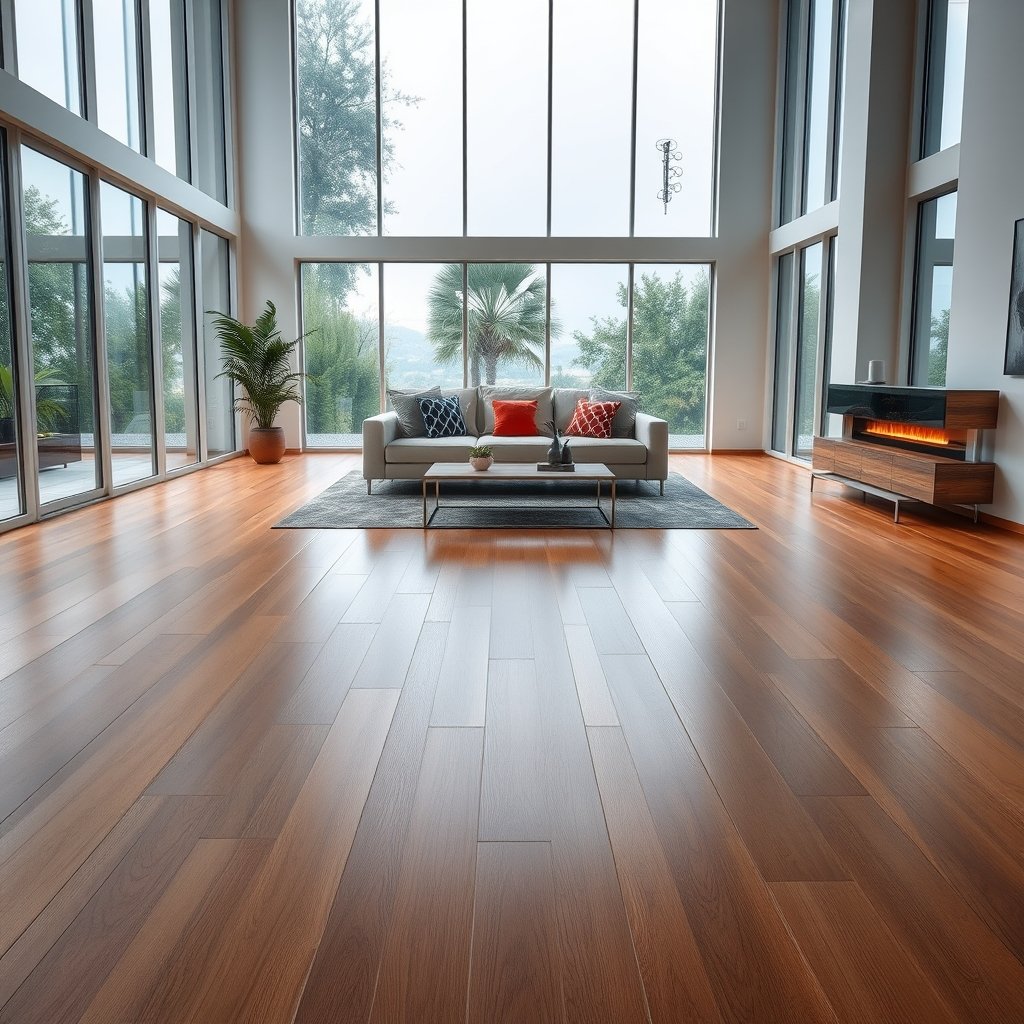
What “waterproof laminate flooring” really means in 2024
In 2024, “waterproof laminate flooring” actually means water-resistant laminate flooring—advanced enough to repel spills and splashes for up to 72 hours, but not impervious to major leaks or long-standing water. The secret lies in moisture-sealed fiberboard cores and edge-sealing resins that dramatically outperform old-school laminate, but still can’t handle flooding like solid plastic LVT or porcelain tile.
According to 2024 lab tests, modern waterproof laminate repels spills for up to 72 hours but is officially rated “water-resistant” rather than fully waterproof (Source). Think of it as armor against everyday kitchen chaos—but not a submarine for major plumbing disasters.
Skipping proper moisture-blocking underlayment or omitting quality perimeter sealing drastically reduces real-world water resistance and lifespan.
Head-to-head performance: Water resistance, lifespan, scratch & stain resistance
| Flooring Type | Water Resistance | Lifespan | Scratch & Stain Resistance | Notes |
|---|---|---|---|---|
| Waterproof Laminate | Repels spills up to 72 hours with perfect install | 15–20 years | Good (melamine wear layer); can show scratches over time | Needs pro install for best longevity |
| LVT/EVP | 100% waterproof, no time limit | 20–25 years | Excellent, often a thick wear layer | Handles flooding, easier on DIYers |
| Porcelain/Ceramic Tile | 100% waterproof (with professional grout/sealant) | 25+ years | Best (hard, nearly impossible to scratch) | Cold and rigid; most expensive to install |
LVT is 100% waterproof with a 20–25 year lifespan. Waterproof laminate: 15–20 years if paired with moisture-blocking underlayment and perimeter seal. Tile: generally 25+ years. (Source)
Cost comparison and real installation price ranges (materials + labor)
Material cost is only half the story—the real expense comes from getting a water-tight, long-lasting install. For an average 2,400-sq-ft kitchen, here’s what you can expect:
- Waterproof laminate flooring: $1,500–$4,700 installed
- LVT/EVP: $1,100–$4,200 installed
- Porcelain/ceramic tile: $2,500–$7,100 installed (higher due to labor, subfloor leveling, grout work)
Installation extras like subfloor prep, moisture-blocking underlayment, perimeter sealing, transition pieces, and potential demo/removal can shift costs. According to 2024 research, tile’s much higher labor makes it the priciest for most kitchen redos. (Source)
Top verified user complaints (2023–2024) — what homeowners actually report
Recent verified reviews have identified clear recurring pain points with waterproof laminate flooring in kitchens:
- Edge and seam failures (especially at transitions) allow water to sneak in and swell boards beneath.
- Warranties often have fine print—coverage usually excludes flooding or standing water beyond specified hours (sometimes as little as 24–72 hours).
- Delamination and swelling happen quickly if the installer skips a moisture-blocking underlayment or botches perimeter sealing.
- Clicking noises on hard subfloors or hollow feel if underlayment is neglected.
- Visual challenges at doors and appliances, and matching transitions can look less “seamless” than LVT or tile.
According to 2024 research, “inadequate edge sealing and transition pieces allowing water ingress, warranty limits tied to exposure time, swelling/delamination from installation errors, perceived lower durability vs LVT/tile, and noticeable click/noise on subfloors” are the most common complaints. (Source)
Installation checklist — contractor vs DIY, materials, and critical tolerances
Even if you’re tempted to DIY, professional installation is often the difference between a waterproof floor that lasts two decades—or one that fails in year one. Follow these essentials:
- Start with a flat, dry, and clean subfloor; repair dips or cracks first.
- Lay a moisture-blocking underlayment, not basic foam.
- Leave expansion gaps at all perimeter walls and transitions (usually ¼ inch).
- Apply perimeter sealant (flexible, waterproof formula) at all walls, under cabinets, and at door thresholds.
- Lock planks firmly—no visible lips or gaps. Align tongue-and-groove precisely.
- Handle cuts around appliances and cabinetry with care—don’t overcut, or you’ll risk exposing the core.
- Install sturdy transition pieces anywhere a doorway or material change occurs. Seal these well.
- Document install with photos for future warranty claims.
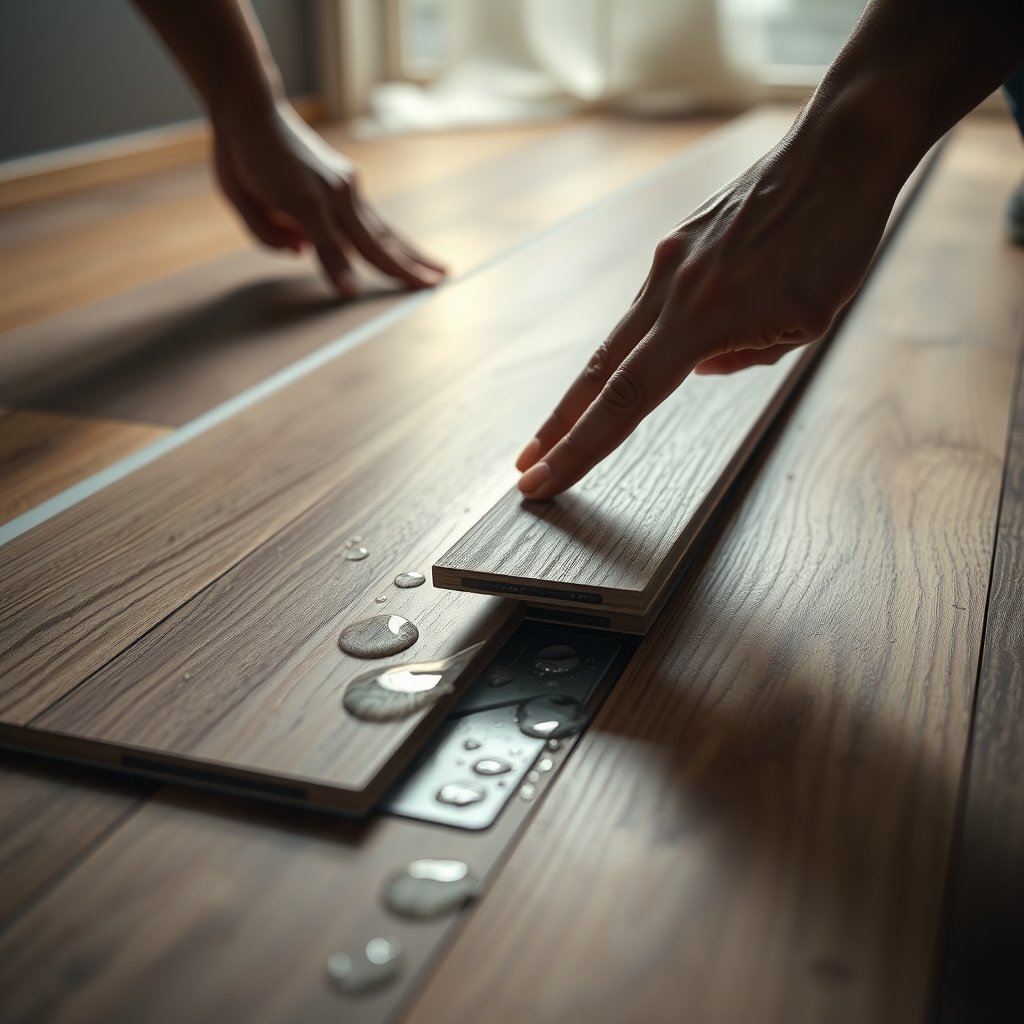
Expected service life of 15–20 years assumes you perform all these steps—skip one step, and risks go up fast. (Source)
Warranty realities — how to read the fine print and what’s commonly excluded
Don’t assume “lifetime” coverage is unconditional. Warranty claims for waterproof laminate flooring often get denied for:
- Standing water on the floor for longer than specified (often 24–72 hours).
- Improper install—no underlayment, skipped sealant, poor plank locking.
- Flooding and major leaks (burst pipes, appliances).
- Damage from wet-mopping or steam mops.
- Transitions and edges not sealed or exposed to water.
According to 2024 research, warranties may limit lifetime claims to “controlled exposures” and most coverage caps water exposure time—double check and get specifics in writing from your contractor or retailer.
Pro move: Request a written statement on the water exposure time your specific warranty protects. File all install photos, documentation, and receipts for faster claims if needed.
Maintenance & long-term risk mitigation for kitchens
Keeping your waterproof laminate flooring healthy means basic but crucial routines:
- Wipe up all spills or pet messes within a few hours—ideally, don’t leave standing water overnight.
- Inspect transitions and perimeter areas regularly for gaps, shrinking, or failing sealant. Reseal as necessary.
- Use furniture pads to reduce scratching. Avoid dragging appliances across the surface.
- Never steam mop (voids some warranties), and use only manufacturer-approved mild cleaners.
As Flacks Flooring puts it: “Think of waterproof laminate as a shield against life’s little accidents, not a submarine.”
This flooring is terrific for routine accidents—pet mishaps, morning coffee spills—not for prolonged flooding. (Source)
Common installation failure modes and how to avoid them (with photos suggested)
Sloppy installation is the #1 cause of premature floor problems. Here’s what to watch for:
- No underlayment/membrane: Water vapor from the slab or subfloor creeps in, swelling and lifting planks from below.
- Poor edge sealing: Even a pinhole gap lets water in at the wall or threshold, causing visible swelling or delamination over time.
- Improper locking technique: Boards misalign, exposing the core to both water and damage from foot traffic or rolling appliances.
- Bad cutting around cabinets/appliances: Overcutting or sloppy edges create entry points for water. Always finish with sealant.
Fixes: If you see swelling, softening, or lifted seams, remove the affected planks, dry the area, and repair or replace as needed. Fully reseal all gaps afterward. Even high-end laminate needs correct install to deliver its promised lifespan—don’t skimp here.
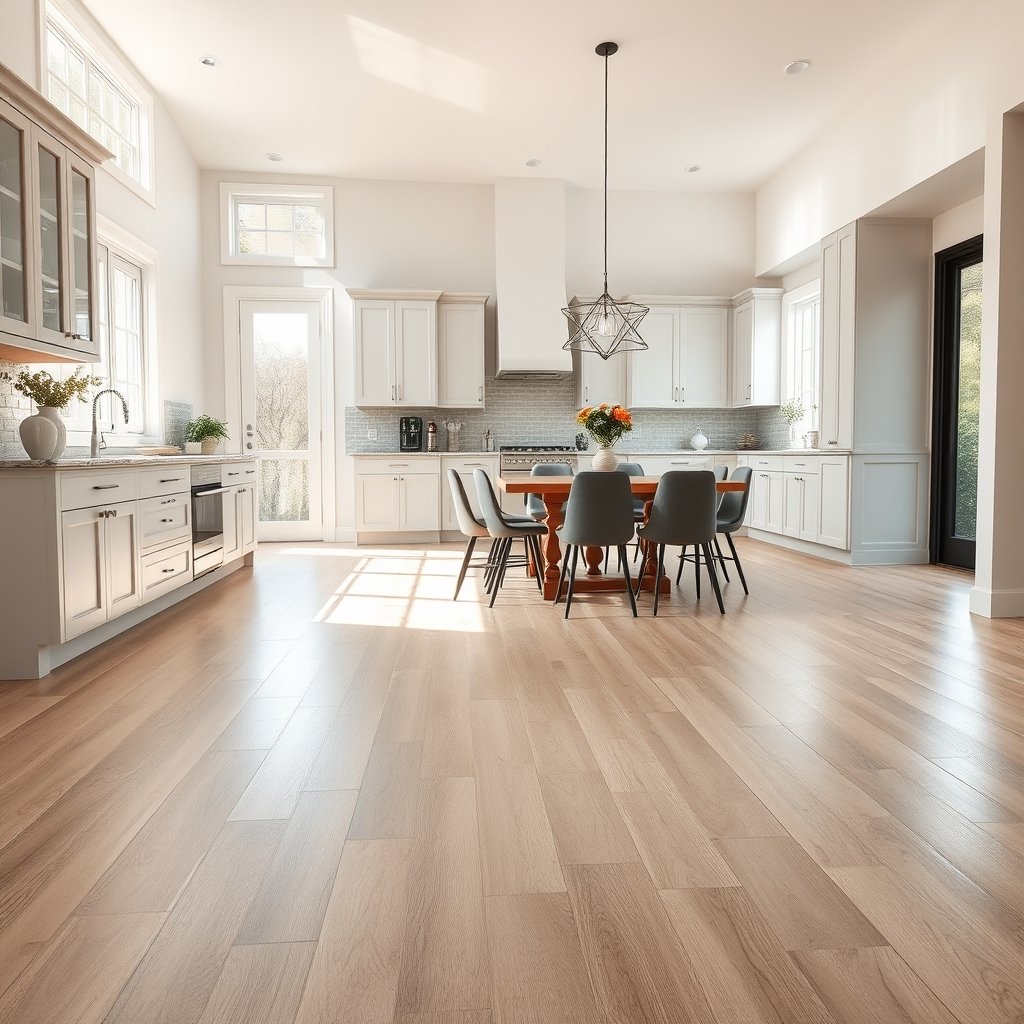
Real-life case studies (3 short examples): Family kitchen, rental unit, modern open plan
Case 1: Family Kitchen, Busy Suburbia
- Project: 2,400 sq ft kitchen, waterproof laminate (midrange brand)
- Prep: Full subfloor leveling, premium underlayment, perimeter sealant
- Cost: Materials $2,600, install $1,800
- Timeline: 6 days
- After 18 months: No swelling, easy wipe clean. Only minor scratches from chair legs.
Case 2: Rental Unit, Fast Turnover
- Project: 700 sq ft galley kitchen, budget waterproof laminate
- Prep: Minimal (skipped underlayment, used cheap caulk for edges)
- Cost: $950 all in
- Timeline: 2 days
- After 12 months: Swelling along dishwasher and transition. Delamination at one seam. Required repair and re-caulking.
Case 3: Modern Open Plan, High-End
- Project: 1,800 sq ft, luxury LVT chosen for “true” waterproofing
- Prep: Pro crew, full moisture barrier, welded seams
- Cost: Materials $3,200, install $2,100
- After 24 months: Zero issues. No visible wear. Still looks new.
Summary: When waterproof laminate is installed correctly, it achieves the 15–20 year lifespan. Failure typically traced to skipped steps, especially at seams and edges.
How top ranking “best waterproof flooring for kitchens” articles fall short (gaps to fill)
- Lack of explicit installation steps for perimeter sealing or underlayment specification.
- Missing real-life cost breakdowns and long-term outcome case studies.
- No copy/paste list of “must ask” warranty questions for installers or dealers.
- Rarely include a standardized comparison of exposure/test conditions (e.g., 24-hours vs 72-hours standing water).
- Most skip troubleshooting guides or photo examples of what can go wrong.
Research shows that proper sealing and underlayment are critical to getting the advertised 15-20 year service life for waterproof laminate. Don’t trust broad “waterproof” claims alone—demand specific, step-by-step install transparency.
You’ll find more detailed technical guides and comparison in our DIY home improvement guides and on the Consumer Reports test archive.
Quick buyer’s checklist & questions to ask your contractor or retailer
- What is the exact water exposure rating (hours) for this brand of waterproof laminate flooring?
- Can you show me the edge/seal technology used for seams and transitions?
- What is the manufacturer’s recommended underlayment—and is it included?
- Are there any warranty exclusions for appliance leaks or pet accidents? What are the official time limits?
- What is your return policy if the flooring swells or delaminates within 1 year?
- What is my total installed cost estimate, including edge sealing, underlayment, transitions, and prep?
- Are your installers manufacturer-certified for this specific product?
- Do you have heavy-duty transition pieces suitable for busy kitchens?
- Will you provide a soak test or sample demo to show water performance?
- Can you show photos from past installs, especially at doors and appliances?
Always verify flood/exposure limits in writing. Warranties usually cap coverage to limited exposure—ask these questions upfront and keep documentation for your records. For more kitchen tech upgrades, check out our smart home energy monitor guide.
Bottom line recommendation & decision matrix
If you want the absolute best waterproof flooring for kitchen durability and longevity—and have the budget—choose LVT or EVP for worry-free waterproofing and a typical 20–25 year service life. If your budget is lower and you’re willing to commit to professional installation with complete moisture protection, waterproof laminate flooring delivers strong results for active homes and stands up to routine kitchen mishaps. Select porcelain or ceramic tile if unmatched durability, heat resistance, and a permanent showroom finish are your top priorities, even with the higher install price.
Comparative install costs for a typical kitchen (2,400 sq ft):
- Waterproof laminate: $1,500–$4,700
- LVT/EVP: $1,100–$4,200
- Porcelain/ceramic tile: $2,500–$7,100
Expected lifespan: Laminate 15–20 years, LVT 20–25 years, tile 25+ years. Choose the fit that matches your usage, install commitment, and next-owner plans.
For more technical breakdowns, visit our latest flooring and appliance comparison hub.
FAQ
Can a refrigerator be installed on waterproof laminate flooring?
Yes, most brands rate their waterproof laminate for heavy appliances, but always add furniture pads and avoid dragging to prevent surface dents. Check manufacturer limits on static weight.
Does flooring go under the dishwasher and kitchen cabinets?
For best water defense and future-proofing, run your flooring continuously beneath freestanding appliances but not under fixed cabinets. Always seal perimeter cut edges under appliances with waterproof sealant.
How long does waterproof laminate take to dry after a spill?
If water sits on the surface for less than 24 hours, simply wipe it up—no drying time needed. If it has seeped into seams, dry with fans. Beyond 72 hours, hidden swelling may occur.
Can waterproof laminate flooring handle total submersion?
No. Lab tests show that all laminate (even “waterproof” types) will eventually swell or delaminate if fully submerged, even for just a day or two. Clean up spills fast, and avoid using in areas prone to major flooding.
Is waterproof laminate or LVT easier for DIY installation?
LVT generally wins for DIY due to forgiving click systems and real 100% waterproofing. Laminate requires more careful underlayment, precise locking, and edge sealing for waterproof claims to hold.
—