

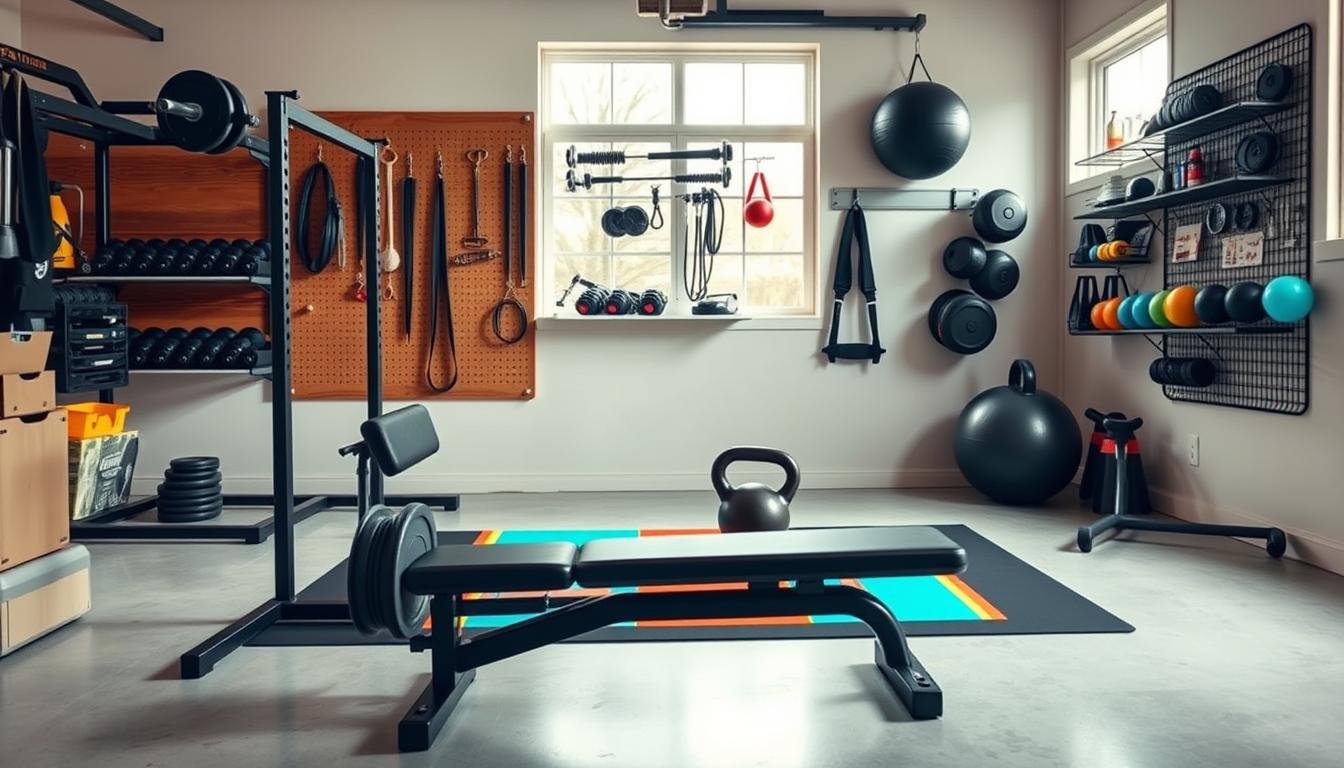
You want a simple, effective way to train at home without wasting money or time. Building a home gym is a real lifestyle upgrade that gives you privacy and convenience. Many people freeze at the start because choices feel endless.
Resources can help. For example, Garage Gym Reviews lists over 2,000 expert and user ratings that make gear decisions easier. That kind of feedback helps you skip bad buys and focus on durable items.
Cost shouldn’t stop you. Most successful owners begin with a few essentials and grow from there. This guide shares practical steps to optimize your garage space, keep your routine steady, and spend wisely on things that last.
If you are new or experienced, you can create a functional, welcoming area that supports long-term health and training on your terms.
Table of Contents
Key Takeaways
- Start small and prioritize durable essentials to save money.
- Use trusted reviews—over 2,000 ratings—to guide purchases.
- Optimize the garage to keep workouts consistent and safe.
- Build a space that fits your schedule, skill level, and budget.
- Focus on quality gear that supports long-term wellness.
Why You Should Build a Home Gym
Turning spare space at home into a personal workout zone gives you freedom to train whenever you want. You remove the wait for machines and the pressure of crowded hours.
Access and convenience matter: 24/7 availability lets you fit short or long sessions into your day. That ease often turns into consistent workouts.
Customize the area to match your goals. Choose equipment that supports strength, cardio, or mobility so every piece earns its place.
“A private training space removes distractions and helps you focus on progress.”
- Skip commute times and gym fees to save money over three years.
- Enjoy privacy that helps you try new movements and push harder.
- Convert underused garage space into long-term value for your property.
| Benefit | What You Get | Impact |
|---|---|---|
| Always Available | Access any time | Better consistency |
| Personalized Design | Gear that matches goals | More effective training |
| Cost Savings | No monthly fees | Lower long‑term cost |
| Privacy | Focus without crowds | Improved performance |
Planning Your Garage Gym Setup Ideas
Measure twice, buy once — that rule saves time and heavy lifting when you plan your training area.
Assessing Your Available Space
First, map the exact dimensions of the area you can dedicate to a home gym. Measure length, width, and ceiling height.
Plan clear walkways and leave room for storage and any vehicle parking. That helps you avoid clutter and keeps the space usable.
Sketch a simple layout before you buy. Position large pieces first and fit smaller items around them.
Setting a Realistic Budget
Identify essentials: versatile dumbbells, resistance bands, and a bench often give the most value per dollar.
Install durable rubber flooring or mats to protect the concrete floor from heavy weightlifting. Rubber puzzle-style mats cut noise and cushion drops.
Build over time. Prioritize needs and add specialty gear later so the cost stays manageable.
| Priority | Why It Matters | Cost Range | Tip |
|---|---|---|---|
| Flooring | Protects concrete, reduces noise | $50–$300 | Choose rubber mats for weightlifting |
| Versatile Gear | Supports many workouts | $100–$600 | Start with adjustable dumbbells |
| Space Planning | Keeps area functional | $0–$50 | Sketch layout and allow clearance |
| Storage | Maintains organization | $30–$200 | Use wall racks to save floor space |
Essential Equipment for Every Budget
Start by choosing core items that deliver the most exercises per dollar and time invested.
Invest in a reliable power rack first. For beginners, the Fitness Reality 810XLT Super Max Power Cage gives solid capacity at a low price. Check price on Amazon
For a commercial‑grade option that fits most smaller spaces, the Rogue R-3 Power Rack is compact and built to last View on Amazon.
- Power rack (Fitness Reality 810XLT) — pro: affordable; con: fewer extras.
- Power rack (Rogue R-3) — pro: heavy‑duty; con: may need bolting.
- Standard barbell + plates — best value for core strength exercises.
- Adjustable bench — adds pressing and supported rows to your workouts.
- Flooring and storage — protect equipment and save space.
| Product | Best for | Pros | Cons |
|---|---|---|---|
| Fitness Reality 810XLT | Beginner strength | Budget friendly, stable | Basic attachments |
| Rogue R-3 | Long‑term investment | Commercial build, compact | Bolting often required |
| Barbell + Plates | All‑around lifts | Versatile, cost effective | Need storage space |
Buying tip: prioritize a solid rack and barbell, check weight capacity, and read reviews before purchase. Smart choices now save you time and money as your fitness gear grows.
Selecting the Right Power Rack
Picking the right power rack shapes safety, space use, and long-term value in your home gym. Choose a unit that fits your floor plan, the plates you own, and the lifts you plan to do.
Comparing Squat Stands and Cages
Squat stands are compact and cheaper, so they suit tight spaces or a smaller budget.
Full cages add storage, more attachments, and better protection when you train alone.
The Rogue R-3 is a compact, commercial‑grade cage with Westside hole spacing for precise bar placement and a sturdy feel in most home gyms.
Safety Features to Look For
Always anchor the rack to the floor to stop tipping during heavy squats or overhead presses.
Spotter arms, safety pins, and solid bars are non‑negotiable if you plan to lift heavy without a partner.
The Fitness Reality 810XLT includes safety bars and a multi‑grip pull‑up bar, which adds value on a tight budget.
| Feature | Squat Stand | Full Cage |
|---|---|---|
| Footprint | Smaller, fits tight spaces | Larger, needs more floor |
| Safety | Basic catches | Spotter arms, pins, full enclosure |
| Attachments | Limited | Lat pulldown, pull‑up, storage |
| Best for | Light to moderate weight | Heavy lifting and solo training |
Choosing Versatile Weight Benches
Choosing between a flat or adjustable bench comes down to balance: stability versus variety. Pick a unit that fits your goals and the rest of your equipment.
The REP FB-5000 Competition Flat Bench is a top-rated choice for many home owners because it offers stability and a good price. If you press heavy lbs, a sturdy flat bench gives a firm base for safe lifts.
Adjustable benches add incline and decline positions, which expand exercise options. They can be slightly less stable than a competition flat unit, so check the weight capacity before you train heavy.
- Look for a firm pad and non-slip surface to protect your form.
- Consider vertical storage models to save floor space when not in use.
- Buy from a reputable brand so the bench lasts through many workouts.
| Type | Best for | Note |
|---|---|---|
| Flat (REP FB-5000) | Heavy pressing, stability | Durable, cost-effective |
| Adjustable | Varied angles, more exercises | Check weight capacity |
| Fold/Vertical | Small spaces, storage | Saves floor area |
Investing in Quality Barbells and Plates
Investing in a solid barbell and resilient plates pays off in safety and longevity. A top choice for serious lifters is the Rogue Ohio Power Bar — it performs well for heavy training and lasts for years in a home gym.
Choose plates that match your goals. Durable iron plates work for most lifts, while bumper plates protect your rubber mats and the floor during drops. Mixing iron and bumper plates is a smart way to balance cost and function.
Check barbell knurling before you buy. Good knurling gives a secure grip during heavy deadlifts and bench presses. Also confirm sleeve rotation and weight capacity on each unit.
- Foundation: A Rogue Ohio Power Bar serves as a long‑term backbone for your training.
- Plate care: Buy plates that resist cracking and store them on a dedicated rack to keep the floor clear.
- Space savers: Adjustable dumbbells like the Bowflex SelectTech 552 cut clutter and expand exercise options without a full set of weights.
- Maintenance: Clean and oil your barbells periodically so sleeves spin and rust stays away.
| Item | Why it matters | Tip |
|---|---|---|
| Barbell (Rogue Ohio) | Durability for heavy lifts | Check knurling and spin |
| Iron + Bumper plates | Cost control and floor protection | Mix types based on lift and lbs |
| Plate rack | Safer storage | Keep mats and floor clear |
Maximizing Space with Wall Storage
A vertical storage plan helps you reclaim floor space and move freely during workouts.
Keep the area clear so dynamic exercises, mobility work, and heavy lifts feel safer and more inviting.
Utilizing Vertical Wall Systems
Gladiator Wall‑Mounted Cabinets and rails let you tuck bands, belts, and small accessories away. This keeps the floor free for mats and weight work.
Hanging Resistance Bands
Install sturdy hooks to hang resistance bands by color or tension. That makes warmups and accessory work faster and prevents bands from getting tangled or damaged.
Organizing Small Accessories
Use a Titan Mass Storage Rack to stack plates and dumbbells neatly. Pair it with labeled bins for clips, jump ropes, and collars so you never waste time searching.
Overhead racks are useful for bulky items you rarely use. Wall‑mounted barbell holders protect bars and clear the floor for safe training.
| Storage Type | Best Use | Benefit |
|---|---|---|
| Gladiator cabinets | Bands, belts, small accessories | Floor remains clear; better organization |
| Titan Mass Storage Rack | Plates, dumbbells | Compact, safe plate storage |
| Wall barbell holders | Barbells | Prevents damage; frees floor space |
| Overhead racks | Bulky seasonal items | Maximizes vertical space |
Flooring Options for Safety and Sound
Good flooring turns heavy lifts from a risk into a routine you can trust. Installing high-quality rubber flooring protects the concrete from plate and barbell drops.
Choose mats that cushion joints during high-intensity training and heavy weightlifting. Interlocking rubber tiles are easy to fit. They let you size the area around a rack, bench, or storage unit.
Proper flooring also cuts noise, which matters if the home workout space sits near living areas or neighbors. Pick slip-resistant surfaces so dynamic moves like lunges or box jumps feel secure.
- Protects the floor from heavy plates and barbells.
- Reduces impact and preserves your equipment.
- Simple cleaning prevents sweat and dust buildup for a hygienic space.
| Option | Best for | Key benefit |
|---|---|---|
| Interlocking rubber tiles | Full coverage | Easy install, customizable |
| Thick rubber rolls | Large areas | Seamless protection, sound dampening |
| Horse stall mats | Budget builds | Durable, protects floor from heavy drops |
| Drop-in platforms | Powerlifting | Stable surface for heavy weights and lbs work |
Creating a Dedicated Cardio Zone
A well-placed cardio zone adds endurance work without disrupting your strength area. Place machines and accessories so they enhance, not block, your main training flow.
Compact Cardio Machine Recommendations
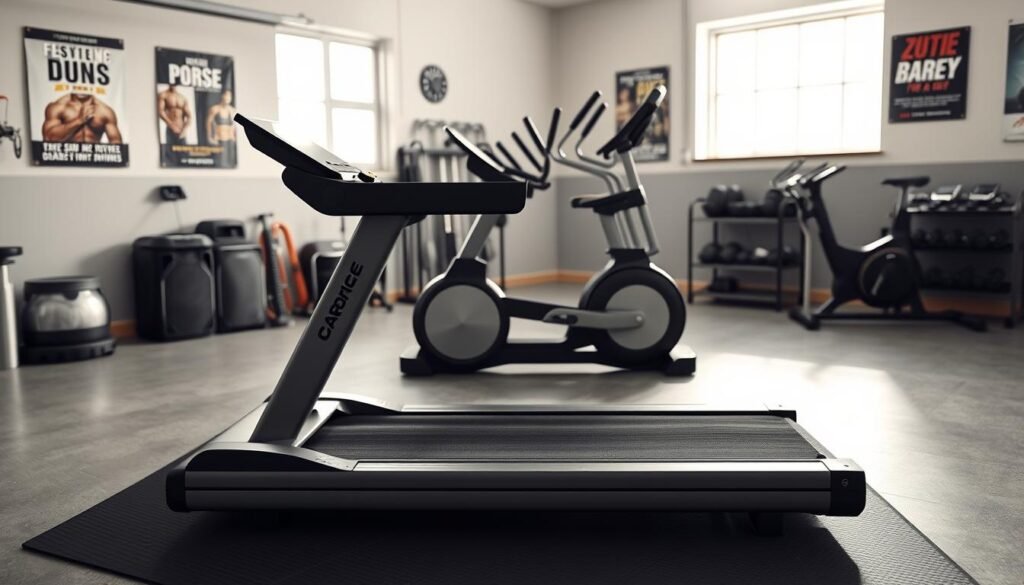
The AssaultBike Classic is a staple in many CrossFit gyms and a top pick for durability and high‑intensity sessions. It delivers brutal conditioning in a relatively compact footprint, so it works well in a tight home space.
Placement and Space-Saving Options
Set your cardio equipment along the longest wall to keep the center clear for lifts and a rack. That layout preserves floor space for heavy weight work and dynamic exercises.
If room is limited, choose foldable cardio units that tuck under a bench or inside a cabinet. Small items like jump ropes and bands belong on wall hooks to keep mats and floors clear.
- Safety: Leave a clear path for movement during HIIT and interval workouts.
- Comfort: Mount a wall fan nearby for ventilation during intense sessions.
- Motivation: Add a TV or tablet near the unit to stream classes and track workouts.
| Item | Benefit | Placement Tip |
|---|---|---|
| AssaultBike Classic | High‑intensity, durable | Along longest wall |
| Foldable treadmill/rower | Saves floor space | Store under bench or in closet |
| Jump rope & bands | Small, versatile | Hang on wall hooks |
Designing a Functional Powerlifting Area
Create a compact, well-organized powerlifting area that keeps your heaviest lifts safe and efficient.
Choose a sturdy rack that fits your floor plan and can handle heavy loads. A solid rack with spotter arms or safety bars protects you when you train alone.
Invest in quality plates and a reliable barbell. Bumper plates absorb drops and protect rubber mats, while a durable barbell reduces flex and improves grip on heavy sets.
Cover the lifting zone with thick rubber mats to protect the floor and cut noise. Leave clear space around the rack so squats and deadlifts are free from obstructions.
“Safety features and smart storage speed up your sessions and cut the risk of injury.”
- Organize plates on a dedicated rack so you can change weights quickly between heavy sets.
- Store accessories—bands, collars, and spare dumbbells—on shelves or wall hooks to keep the area tidy.
- Designate one zone for weightlifting so your training stays focused and consistent.
| Item | Purpose | Tip |
|---|---|---|
| Power rack | Safe heavy squats/bench | Add spotter arms and anchor to floor |
| Bumper plates & barbell | Handle heavy loads | Buy rated plates; check bar capacity |
| Rubber mats | Protect floor and gear | Use thick interlocking mats under the rack |
Setting Up a Minimalist Calisthenics Space
A focused calisthenics corner turns bodyweight drills into a full strength routine without bulky gear. This approach keeps your home gym streamlined and lets you train efficiently in a small space. Minimal gear means lower cost and less storage to manage.
Installing Pull-up Bars
Choose a wall-mounted or ceiling-mounted bar to save floor room. A secure bar gives you pull-ups, chin-ups, toes-to-bar, and hanging mobility work.
Safety tip: Anchor into structural beams and test load limits before heavy use. Use resistance bands to assist reps as you build strength.
Using Gymnastics Rings
Rings add instability and scale nearly every bodyweight exercise. Hang them from your rack, a beam, or a dedicated anchor point.
Progression: Start with supported ring rows, then move to dips and false-grip presses as your strength improves. Keep the area free of clutter and mats beneath to protect the floor during dynamic moves.
| Item | Best Use | Why it matters |
|---|---|---|
| Pull-up bars | Vertical pulls, hangs | Saves space; anchors to beams |
| Gymnastics rings | Push/pull stability | Scales many exercises safely |
| Resistance bands | Assistance, added tension | Low-cost gear that expands workouts |
Incorporating Climate Control and Comfort
Small climate tweaks can keep your workouts consistent through hot summers and cold winters.
Start with airflow: add a powerful fan for summer and a compact space heater for chilly months. These changes help you train safely and keep your gear in good shape.
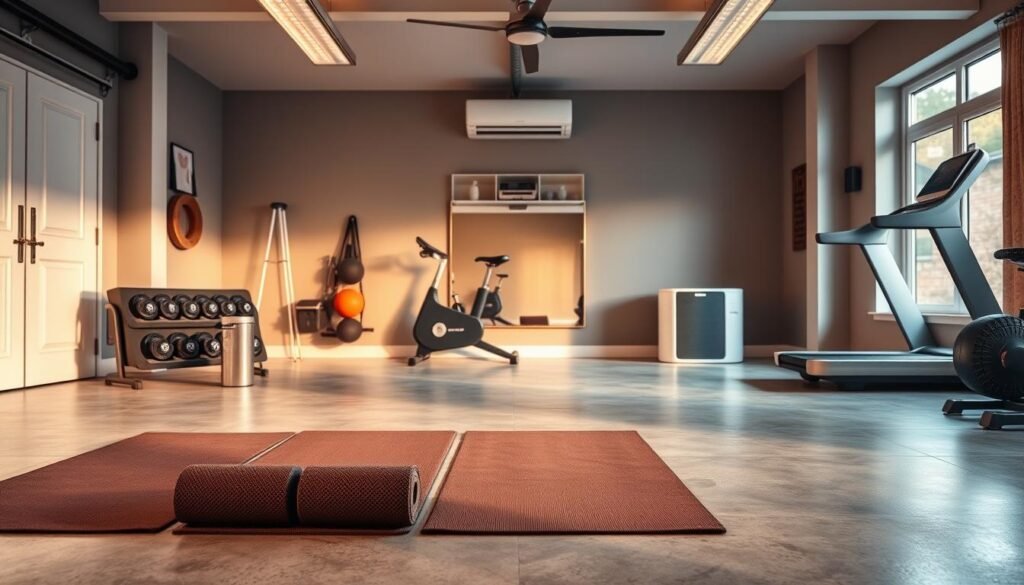
Insulate the door to stabilize temperature and reduce drafts. If moisture is a problem, a dehumidifier protects mats and equipment and improves air quality.
Set up a small hydration station — a mini fridge or water cooler — so you don’t skip breaks. Good lighting and a wireless speaker system boost focus and make workouts more enjoyable.
| Feature | Benefit | Quick tip |
|---|---|---|
| Fan / Heater | Comfort year-round | Choose energy-efficient models |
| Door insulation | Stable temp, lowers noise | Use weatherstripping |
| Dehumidifier | Protects mats & metal | Empty regularly; monitor humidity |
| Hydration & lighting | Longer, safer workouts | Mount bright, cool LEDs; keep water handy |
Result: a comfortable, inviting space that nudges you to train more and protects your investment on a modest budget.
Tips for Sharing Your Workout Space
Sharing your workout area works best when expectations are clear from day one. A short set of rules keeps the space organized and respectful for everyone who uses it.
Start with cleaning and usage rules. Wipe down equipment after each use. Keep collars, clips, and resistance bands in labeled bins so items are easy to find.
Establishing Cleaning and Usage Rules
Make a shared schedule to manage access to the rack and cardio time. That prevents conflicts and ensures fair use of high-demand equipment.
- Storage: Use wall hooks and overhead options to free floor space when you park a vehicle or need clear room near the door.
- Maintenance: Agree who inspects bars, plates, and accessories and who reports safety issues.
- Return policy: Always put weights and bars back in their spots so the next person can start training immediately.
“A tidy, shared space reduces friction and keeps everyone focused on workouts.”
Splitting costs for quality equipment makes it easier to buy a solid rack or better plates. Communicate often about repairs and access to keep the plan running smoothly.
Maintaining Your Equipment for Longevity
A few minutes of upkeep each week keeps your training area safe and reliable.
Regularly cleaning your gym equipment prevents rust and stops grime from degrading metal and upholstery. Wipe benches and mats after every session to cut sweat and bacteria buildup.
Inspect your rack and barbells often. Tighten bolts, check welds, and look for any structural wear so small problems don’t become big failures.
Store plates and bars off the floor. Proper storage protects gear from damage and keeps the space clear for safe access during workouts.
Lubricate barbell sleeves so they spin freely — this helps Olympic lifts feel smooth and reduces strain on your wrists. If you spot damage, fix it right away to protect your investment.
Consistent maintenance is a small investment of time that pays off by keeping your gym ready for every session.
| Task | Frequency | Why it matters |
|---|---|---|
| Wipe benches & mats | After every use | Reduces bacteria; preserves padding |
| Inspect rack & bolts | Weekly | Prevents structural failures |
| Lubricate sleeves | Monthly | Keeps sleeves spinning; protects bearings |
| Organize storage | Monthly | Protects plates/bars and ensures safe access |
Common Mistakes to Avoid During Setup
Small planning errors can turn a promising training area into a costly mess. You want a space that grows with your goals, not a pile of unused gear.
Don’t buy too much equipment up front. Start with what you’ll use most. Buying dozens of items before you know what you’ll need wastes money and space.
Avoid cheap gear. Low-quality pieces often break and cost more in replacements. Spend a bit more on durable items that last.
- Plan proper flooring — it protects the floor and cuts noise.
- Prioritize a solid, well‑anchored rack — it’s the foundation of safe lifting and your biggest budget decision.
- Measure the room carefully so you don’t end up cramped and unable to perform key lifts.
- Create a storage plan to avoid clutter and make daily workouts easy.
Take time to research and compare products. A clear plan helps you buy the right gear, save money, and build a space that serves you for years.
| Mistake | Impact | Quick Fix |
|---|---|---|
| Buying too much | Cluttered area; wasted money | Start with essentials and add later |
| Cheap equipment | Breakage; safety risk | Choose reputable brands; read reviews |
| No flooring plan | Noise, floor damage | Install rubber mats or tiles |
| Poor rack choice | Unsafe lifts; limited growth | Buy a sturdy, anchorable rack |
Conclusion
Completing a smart, staged build gives you a durable, welcoming place to achieve real results. When you finish planning and pick a few quality pieces, the space becomes useful from day one.
Start small and add gear as your goals grow. Prioritize a sturdy rack and a reliable barbell so your foundation stays solid.
Keep your equipment clean and storage organized—those habits extend life and make training easier. If you maintain the space, it stays inviting and safe.
Take the first step today: plan your area, buy the essentials, and enjoy the freedom and consistency a home gym provides.
FAQ
How much space will you need to build a basic home gym?
What’s a realistic budget to equip a quality home training area?
How much space will you need to build a basic home gym?
What’s a realistic budget to equip a quality home training area?
FAQ
How much space will you need to build a basic home gym?
You can start with as little as 4 feet by 6 feet for a compact zone with a mat, resistance bands, and dumbbells. For a powerlifting or full weightlifting area with a rack and bench, plan on at least 10 feet by 10 feet to allow safe barbell movement and storage of plates, bars, and a bench.
What’s a realistic budget to equip a quality home training area?
A functional budget-friendly setup can run 0–
FAQ
How much space will you need to build a basic home gym?
You can start with as little as 4 feet by 6 feet for a compact zone with a mat, resistance bands, and dumbbells. For a powerlifting or full weightlifting area with a rack and bench, plan on at least 10 feet by 10 feet to allow safe barbell movement and storage of plates, bars, and a bench.
What’s a realistic budget to equip a quality home training area?
A functional budget-friendly setup can run $300–$1,000 using adjustable dumbbells, a budget barbell, and rubber plates. A more durable, long-term rig with a power rack, calibrated plates, and a commercial barbell will often cost $1,500–$4,000 depending on brands like Rogue or CAP.
Which flooring should you choose to protect the floor and reduce noise?
Use interlocking rubber tiles or 3/4″ thick horse stall mats for the lifting zone to protect floors and absorb impact. Thinner EVA foam works for bodyweight and cardio areas. Rubber mats also protect plates, reduce sound, and make deadlifts safer.
Do you need a dedicated power rack, or are squat stands okay?
Squat stands save space and cost less, but a full power rack adds safety features like spotter arms and more attachments for pull-ups or landmine work. If you lift heavy or train alone, a rack with safety pins or straps is a smarter, safer choice.
What are the must-have accessories for a balanced training area?
Keep resistance bands, a quality barbell, weight plates, collars, adjustable bench, set of dumbbells (or adjustable pair), kettlebell, and a jump rope. Add storage like plate trees and wall mounts to keep the area tidy and safe.
How can you store plates, bars, and accessories to save space?
Use vertical plate trees, wall-mounted bar holders, and shelving for small items like chalk, straps, and bands. Vertical systems and slatwall panels free up floor space and make equipment accessible while keeping the area clear for workouts.
Are resistance bands worth investing in and how should you use them?
Yes. Bands are affordable, portable, and add variable resistance to lifts, assist pull-ups, and help with mobility work. Keep a few light-to-heavy bands and anchor them to a sturdy rack or door anchor for varied use.
What should you look for when buying a barbell and weight plates?
For barbells, check knurling, tensile strength, and sleeve spin—brands like Rogue, Ohio Bar, or CAP are reliable. For plates, rubber-coated or bumper plates reduce noise and floor damage; steel plates work for general strength but need mats underneath.
How do you set up a cardio zone without taking up too much room?
Choose compact equipment like a foldable treadmill, a rowing machine with upright storage, or an air bike. Place a mat underneath, and use wall hooks for jump ropes and bands. Keep space flexible so it doubles as lifting or mobility area.
What safety practices should you follow when training at home?
Ensure proper flooring, maintain clear lifting paths, secure racks to the floor if needed, use collars on barbells, and inspect equipment regularly. If you lift heavy alone, use spotter arms or safety straps and learn proper form to reduce injury risk.
How do you manage climate control and ventilation in a small space?
Use a high-velocity fan, a portable air conditioner, or a dehumidifier depending on your climate. Good airflow prevents odors and preserves equipment. Open the door or window during workouts when possible, and keep towels and cleaning spray handy.
Can you share the workout space with family without conflicts?
Set clear rules for storage, cleaning, and booking workout times. Use labeled shelves and bins for personal items. Establish noise windows for heavy lifting and agree on floor-use priorities to avoid scheduling clashes and maintain harmony.
What maintenance will keep your equipment lasting longer?
Wipe down bars, benches, and machines after use, check bolts monthly, oil barbell sleeves if they stick, and keep plates off damp concrete to prevent rust. Regularly inspect straps, bands, and cables and replace worn items promptly.
What are common mistakes people make when creating their home training area?
Common errors include underestimating space needs, buying low-quality bars or plates, skipping proper flooring, and neglecting storage. Also avoid overcrowding with rarely used items; focus on versatile equipment that supports your goals.
,000 using adjustable dumbbells, a budget barbell, and rubber plates. A more durable, long-term rig with a power rack, calibrated plates, and a commercial barbell will often cost
FAQ
How much space will you need to build a basic home gym?
You can start with as little as 4 feet by 6 feet for a compact zone with a mat, resistance bands, and dumbbells. For a powerlifting or full weightlifting area with a rack and bench, plan on at least 10 feet by 10 feet to allow safe barbell movement and storage of plates, bars, and a bench.
What’s a realistic budget to equip a quality home training area?
A functional budget-friendly setup can run $300–$1,000 using adjustable dumbbells, a budget barbell, and rubber plates. A more durable, long-term rig with a power rack, calibrated plates, and a commercial barbell will often cost $1,500–$4,000 depending on brands like Rogue or CAP.
Which flooring should you choose to protect the floor and reduce noise?
Use interlocking rubber tiles or 3/4″ thick horse stall mats for the lifting zone to protect floors and absorb impact. Thinner EVA foam works for bodyweight and cardio areas. Rubber mats also protect plates, reduce sound, and make deadlifts safer.
Do you need a dedicated power rack, or are squat stands okay?
Squat stands save space and cost less, but a full power rack adds safety features like spotter arms and more attachments for pull-ups or landmine work. If you lift heavy or train alone, a rack with safety pins or straps is a smarter, safer choice.
What are the must-have accessories for a balanced training area?
Keep resistance bands, a quality barbell, weight plates, collars, adjustable bench, set of dumbbells (or adjustable pair), kettlebell, and a jump rope. Add storage like plate trees and wall mounts to keep the area tidy and safe.
How can you store plates, bars, and accessories to save space?
Use vertical plate trees, wall-mounted bar holders, and shelving for small items like chalk, straps, and bands. Vertical systems and slatwall panels free up floor space and make equipment accessible while keeping the area clear for workouts.
Are resistance bands worth investing in and how should you use them?
Yes. Bands are affordable, portable, and add variable resistance to lifts, assist pull-ups, and help with mobility work. Keep a few light-to-heavy bands and anchor them to a sturdy rack or door anchor for varied use.
What should you look for when buying a barbell and weight plates?
For barbells, check knurling, tensile strength, and sleeve spin—brands like Rogue, Ohio Bar, or CAP are reliable. For plates, rubber-coated or bumper plates reduce noise and floor damage; steel plates work for general strength but need mats underneath.
How do you set up a cardio zone without taking up too much room?
Choose compact equipment like a foldable treadmill, a rowing machine with upright storage, or an air bike. Place a mat underneath, and use wall hooks for jump ropes and bands. Keep space flexible so it doubles as lifting or mobility area.
What safety practices should you follow when training at home?
Ensure proper flooring, maintain clear lifting paths, secure racks to the floor if needed, use collars on barbells, and inspect equipment regularly. If you lift heavy alone, use spotter arms or safety straps and learn proper form to reduce injury risk.
How do you manage climate control and ventilation in a small space?
Use a high-velocity fan, a portable air conditioner, or a dehumidifier depending on your climate. Good airflow prevents odors and preserves equipment. Open the door or window during workouts when possible, and keep towels and cleaning spray handy.
Can you share the workout space with family without conflicts?
Set clear rules for storage, cleaning, and booking workout times. Use labeled shelves and bins for personal items. Establish noise windows for heavy lifting and agree on floor-use priorities to avoid scheduling clashes and maintain harmony.
What maintenance will keep your equipment lasting longer?
Wipe down bars, benches, and machines after use, check bolts monthly, oil barbell sleeves if they stick, and keep plates off damp concrete to prevent rust. Regularly inspect straps, bands, and cables and replace worn items promptly.
What are common mistakes people make when creating their home training area?
Common errors include underestimating space needs, buying low-quality bars or plates, skipping proper flooring, and neglecting storage. Also avoid overcrowding with rarely used items; focus on versatile equipment that supports your goals.
,500–,000 depending on brands like Rogue or CAP.
Which flooring should you choose to protect the floor and reduce noise?
Use interlocking rubber tiles or 3/4″ thick horse stall mats for the lifting zone to protect floors and absorb impact. Thinner EVA foam works for bodyweight and cardio areas. Rubber mats also protect plates, reduce sound, and make deadlifts safer.
Do you need a dedicated power rack, or are squat stands okay?
Squat stands save space and cost less, but a full power rack adds safety features like spotter arms and more attachments for pull-ups or landmine work. If you lift heavy or train alone, a rack with safety pins or straps is a smarter, safer choice.
What are the must-have accessories for a balanced training area?
Keep resistance bands, a quality barbell, weight plates, collars, adjustable bench, set of dumbbells (or adjustable pair), kettlebell, and a jump rope. Add storage like plate trees and wall mounts to keep the area tidy and safe.
How can you store plates, bars, and accessories to save space?
Use vertical plate trees, wall-mounted bar holders, and shelving for small items like chalk, straps, and bands. Vertical systems and slatwall panels free up floor space and make equipment accessible while keeping the area clear for workouts.
Are resistance bands worth investing in and how should you use them?
Yes. Bands are affordable, portable, and add variable resistance to lifts, assist pull-ups, and help with mobility work. Keep a few light-to-heavy bands and anchor them to a sturdy rack or door anchor for varied use.
What should you look for when buying a barbell and weight plates?
For barbells, check knurling, tensile strength, and sleeve spin—brands like Rogue, Ohio Bar, or CAP are reliable. For plates, rubber-coated or bumper plates reduce noise and floor damage; steel plates work for general strength but need mats underneath.
How do you set up a cardio zone without taking up too much room?
Choose compact equipment like a foldable treadmill, a rowing machine with upright storage, or an air bike. Place a mat underneath, and use wall hooks for jump ropes and bands. Keep space flexible so it doubles as lifting or mobility area.
What safety practices should you follow when training at home?
Ensure proper flooring, maintain clear lifting paths, secure racks to the floor if needed, use collars on barbells, and inspect equipment regularly. If you lift heavy alone, use spotter arms or safety straps and learn proper form to reduce injury risk.
How do you manage climate control and ventilation in a small space?
Use a high-velocity fan, a portable air conditioner, or a dehumidifier depending on your climate. Good airflow prevents odors and preserves equipment. Open the door or window during workouts when possible, and keep towels and cleaning spray handy.
Can you share the workout space with family without conflicts?
Set clear rules for storage, cleaning, and booking workout times. Use labeled shelves and bins for personal items. Establish noise windows for heavy lifting and agree on floor-use priorities to avoid scheduling clashes and maintain harmony.
What maintenance will keep your equipment lasting longer?
Wipe down bars, benches, and machines after use, check bolts monthly, oil barbell sleeves if they stick, and keep plates off damp concrete to prevent rust. Regularly inspect straps, bands, and cables and replace worn items promptly.
What are common mistakes people make when creating their home training area?
Common errors include underestimating space needs, buying low-quality bars or plates, skipping proper flooring, and neglecting storage. Also avoid overcrowding with rarely used items; focus on versatile equipment that supports your goals.
FAQ
How much space will you need to build a basic home gym?
You can start with as little as 4 feet by 6 feet for a compact zone with a mat, resistance bands, and dumbbells. For a powerlifting or full weightlifting area with a rack and bench, plan on at least 10 feet by 10 feet to allow safe barbell movement and storage of plates, bars, and a bench.
What’s a realistic budget to equip a quality home training area?
A functional budget-friendly setup can run 0–
FAQ
How much space will you need to build a basic home gym?
You can start with as little as 4 feet by 6 feet for a compact zone with a mat, resistance bands, and dumbbells. For a powerlifting or full weightlifting area with a rack and bench, plan on at least 10 feet by 10 feet to allow safe barbell movement and storage of plates, bars, and a bench.
What’s a realistic budget to equip a quality home training area?
A functional budget-friendly setup can run $300–$1,000 using adjustable dumbbells, a budget barbell, and rubber plates. A more durable, long-term rig with a power rack, calibrated plates, and a commercial barbell will often cost $1,500–$4,000 depending on brands like Rogue or CAP.
Which flooring should you choose to protect the floor and reduce noise?
Use interlocking rubber tiles or 3/4″ thick horse stall mats for the lifting zone to protect floors and absorb impact. Thinner EVA foam works for bodyweight and cardio areas. Rubber mats also protect plates, reduce sound, and make deadlifts safer.
Do you need a dedicated power rack, or are squat stands okay?
Squat stands save space and cost less, but a full power rack adds safety features like spotter arms and more attachments for pull-ups or landmine work. If you lift heavy or train alone, a rack with safety pins or straps is a smarter, safer choice.
What are the must-have accessories for a balanced training area?
Keep resistance bands, a quality barbell, weight plates, collars, adjustable bench, set of dumbbells (or adjustable pair), kettlebell, and a jump rope. Add storage like plate trees and wall mounts to keep the area tidy and safe.
How can you store plates, bars, and accessories to save space?
Use vertical plate trees, wall-mounted bar holders, and shelving for small items like chalk, straps, and bands. Vertical systems and slatwall panels free up floor space and make equipment accessible while keeping the area clear for workouts.
Are resistance bands worth investing in and how should you use them?
Yes. Bands are affordable, portable, and add variable resistance to lifts, assist pull-ups, and help with mobility work. Keep a few light-to-heavy bands and anchor them to a sturdy rack or door anchor for varied use.
What should you look for when buying a barbell and weight plates?
For barbells, check knurling, tensile strength, and sleeve spin—brands like Rogue, Ohio Bar, or CAP are reliable. For plates, rubber-coated or bumper plates reduce noise and floor damage; steel plates work for general strength but need mats underneath.
How do you set up a cardio zone without taking up too much room?
Choose compact equipment like a foldable treadmill, a rowing machine with upright storage, or an air bike. Place a mat underneath, and use wall hooks for jump ropes and bands. Keep space flexible so it doubles as lifting or mobility area.
What safety practices should you follow when training at home?
Ensure proper flooring, maintain clear lifting paths, secure racks to the floor if needed, use collars on barbells, and inspect equipment regularly. If you lift heavy alone, use spotter arms or safety straps and learn proper form to reduce injury risk.
How do you manage climate control and ventilation in a small space?
Use a high-velocity fan, a portable air conditioner, or a dehumidifier depending on your climate. Good airflow prevents odors and preserves equipment. Open the door or window during workouts when possible, and keep towels and cleaning spray handy.
Can you share the workout space with family without conflicts?
Set clear rules for storage, cleaning, and booking workout times. Use labeled shelves and bins for personal items. Establish noise windows for heavy lifting and agree on floor-use priorities to avoid scheduling clashes and maintain harmony.
What maintenance will keep your equipment lasting longer?
Wipe down bars, benches, and machines after use, check bolts monthly, oil barbell sleeves if they stick, and keep plates off damp concrete to prevent rust. Regularly inspect straps, bands, and cables and replace worn items promptly.
What are common mistakes people make when creating their home training area?
Common errors include underestimating space needs, buying low-quality bars or plates, skipping proper flooring, and neglecting storage. Also avoid overcrowding with rarely used items; focus on versatile equipment that supports your goals.
,000 using adjustable dumbbells, a budget barbell, and rubber plates. A more durable, long-term rig with a power rack, calibrated plates, and a commercial barbell will often cost
FAQ
How much space will you need to build a basic home gym?
You can start with as little as 4 feet by 6 feet for a compact zone with a mat, resistance bands, and dumbbells. For a powerlifting or full weightlifting area with a rack and bench, plan on at least 10 feet by 10 feet to allow safe barbell movement and storage of plates, bars, and a bench.
What’s a realistic budget to equip a quality home training area?
A functional budget-friendly setup can run $300–$1,000 using adjustable dumbbells, a budget barbell, and rubber plates. A more durable, long-term rig with a power rack, calibrated plates, and a commercial barbell will often cost $1,500–$4,000 depending on brands like Rogue or CAP.
Which flooring should you choose to protect the floor and reduce noise?
Use interlocking rubber tiles or 3/4″ thick horse stall mats for the lifting zone to protect floors and absorb impact. Thinner EVA foam works for bodyweight and cardio areas. Rubber mats also protect plates, reduce sound, and make deadlifts safer.
Do you need a dedicated power rack, or are squat stands okay?
Squat stands save space and cost less, but a full power rack adds safety features like spotter arms and more attachments for pull-ups or landmine work. If you lift heavy or train alone, a rack with safety pins or straps is a smarter, safer choice.
What are the must-have accessories for a balanced training area?
Keep resistance bands, a quality barbell, weight plates, collars, adjustable bench, set of dumbbells (or adjustable pair), kettlebell, and a jump rope. Add storage like plate trees and wall mounts to keep the area tidy and safe.
How can you store plates, bars, and accessories to save space?
Use vertical plate trees, wall-mounted bar holders, and shelving for small items like chalk, straps, and bands. Vertical systems and slatwall panels free up floor space and make equipment accessible while keeping the area clear for workouts.
Are resistance bands worth investing in and how should you use them?
Yes. Bands are affordable, portable, and add variable resistance to lifts, assist pull-ups, and help with mobility work. Keep a few light-to-heavy bands and anchor them to a sturdy rack or door anchor for varied use.
What should you look for when buying a barbell and weight plates?
For barbells, check knurling, tensile strength, and sleeve spin—brands like Rogue, Ohio Bar, or CAP are reliable. For plates, rubber-coated or bumper plates reduce noise and floor damage; steel plates work for general strength but need mats underneath.
How do you set up a cardio zone without taking up too much room?
Choose compact equipment like a foldable treadmill, a rowing machine with upright storage, or an air bike. Place a mat underneath, and use wall hooks for jump ropes and bands. Keep space flexible so it doubles as lifting or mobility area.
What safety practices should you follow when training at home?
Ensure proper flooring, maintain clear lifting paths, secure racks to the floor if needed, use collars on barbells, and inspect equipment regularly. If you lift heavy alone, use spotter arms or safety straps and learn proper form to reduce injury risk.
How do you manage climate control and ventilation in a small space?
Use a high-velocity fan, a portable air conditioner, or a dehumidifier depending on your climate. Good airflow prevents odors and preserves equipment. Open the door or window during workouts when possible, and keep towels and cleaning spray handy.
Can you share the workout space with family without conflicts?
Set clear rules for storage, cleaning, and booking workout times. Use labeled shelves and bins for personal items. Establish noise windows for heavy lifting and agree on floor-use priorities to avoid scheduling clashes and maintain harmony.
What maintenance will keep your equipment lasting longer?
Wipe down bars, benches, and machines after use, check bolts monthly, oil barbell sleeves if they stick, and keep plates off damp concrete to prevent rust. Regularly inspect straps, bands, and cables and replace worn items promptly.
What are common mistakes people make when creating their home training area?
Common errors include underestimating space needs, buying low-quality bars or plates, skipping proper flooring, and neglecting storage. Also avoid overcrowding with rarely used items; focus on versatile equipment that supports your goals.
,500–,000 depending on brands like Rogue or CAP.
Which flooring should you choose to protect the floor and reduce noise?
Use interlocking rubber tiles or 3/4″ thick horse stall mats for the lifting zone to protect floors and absorb impact. Thinner EVA foam works for bodyweight and cardio areas. Rubber mats also protect plates, reduce sound, and make deadlifts safer.
Do you need a dedicated power rack, or are squat stands okay?
Squat stands save space and cost less, but a full power rack adds safety features like spotter arms and more attachments for pull-ups or landmine work. If you lift heavy or train alone, a rack with safety pins or straps is a smarter, safer choice.
What are the must-have accessories for a balanced training area?
Keep resistance bands, a quality barbell, weight plates, collars, adjustable bench, set of dumbbells (or adjustable pair), kettlebell, and a jump rope. Add storage like plate trees and wall mounts to keep the area tidy and safe.
How can you store plates, bars, and accessories to save space?
Use vertical plate trees, wall-mounted bar holders, and shelving for small items like chalk, straps, and bands. Vertical systems and slatwall panels free up floor space and make equipment accessible while keeping the area clear for workouts.
Are resistance bands worth investing in and how should you use them?
Yes. Bands are affordable, portable, and add variable resistance to lifts, assist pull-ups, and help with mobility work. Keep a few light-to-heavy bands and anchor them to a sturdy rack or door anchor for varied use.
What should you look for when buying a barbell and weight plates?
For barbells, check knurling, tensile strength, and sleeve spin—brands like Rogue, Ohio Bar, or CAP are reliable. For plates, rubber-coated or bumper plates reduce noise and floor damage; steel plates work for general strength but need mats underneath.
How do you set up a cardio zone without taking up too much room?
Choose compact equipment like a foldable treadmill, a rowing machine with upright storage, or an air bike. Place a mat underneath, and use wall hooks for jump ropes and bands. Keep space flexible so it doubles as lifting or mobility area.
What safety practices should you follow when training at home?
Ensure proper flooring, maintain clear lifting paths, secure racks to the floor if needed, use collars on barbells, and inspect equipment regularly. If you lift heavy alone, use spotter arms or safety straps and learn proper form to reduce injury risk.
How do you manage climate control and ventilation in a small space?
Use a high-velocity fan, a portable air conditioner, or a dehumidifier depending on your climate. Good airflow prevents odors and preserves equipment. Open the door or window during workouts when possible, and keep towels and cleaning spray handy.
Can you share the workout space with family without conflicts?
Set clear rules for storage, cleaning, and booking workout times. Use labeled shelves and bins for personal items. Establish noise windows for heavy lifting and agree on floor-use priorities to avoid scheduling clashes and maintain harmony.
What maintenance will keep your equipment lasting longer?
Wipe down bars, benches, and machines after use, check bolts monthly, oil barbell sleeves if they stick, and keep plates off damp concrete to prevent rust. Regularly inspect straps, bands, and cables and replace worn items promptly.
What are common mistakes people make when creating their home training area?
Common errors include underestimating space needs, buying low-quality bars or plates, skipping proper flooring, and neglecting storage. Also avoid overcrowding with rarely used items; focus on versatile equipment that supports your goals.
Which flooring should you choose to protect the floor and reduce noise?
Do you need a dedicated power rack, or are squat stands okay?
What are the must-have accessories for a balanced training area?
How can you store plates, bars, and accessories to save space?
Are resistance bands worth investing in and how should you use them?
What should you look for when buying a barbell and weight plates?
How do you set up a cardio zone without taking up too much room?
What safety practices should you follow when training at home?
How do you manage climate control and ventilation in a small space?
Can you share the workout space with family without conflicts?
What maintenance will keep your equipment lasting longer?
What are common mistakes people make when creating their home training area?
How much space will you need to build a basic home gym?
What’s a realistic budget to equip a quality home training area?
FAQ
How much space will you need to build a basic home gym?
You can start with as little as 4 feet by 6 feet for a compact zone with a mat, resistance bands, and dumbbells. For a powerlifting or full weightlifting area with a rack and bench, plan on at least 10 feet by 10 feet to allow safe barbell movement and storage of plates, bars, and a bench.
What’s a realistic budget to equip a quality home training area?
A functional budget-friendly setup can run 0–
FAQ
How much space will you need to build a basic home gym?
You can start with as little as 4 feet by 6 feet for a compact zone with a mat, resistance bands, and dumbbells. For a powerlifting or full weightlifting area with a rack and bench, plan on at least 10 feet by 10 feet to allow safe barbell movement and storage of plates, bars, and a bench.
What’s a realistic budget to equip a quality home training area?
A functional budget-friendly setup can run $300–$1,000 using adjustable dumbbells, a budget barbell, and rubber plates. A more durable, long-term rig with a power rack, calibrated plates, and a commercial barbell will often cost $1,500–$4,000 depending on brands like Rogue or CAP.
Which flooring should you choose to protect the floor and reduce noise?
Use interlocking rubber tiles or 3/4″ thick horse stall mats for the lifting zone to protect floors and absorb impact. Thinner EVA foam works for bodyweight and cardio areas. Rubber mats also protect plates, reduce sound, and make deadlifts safer.
Do you need a dedicated power rack, or are squat stands okay?
Squat stands save space and cost less, but a full power rack adds safety features like spotter arms and more attachments for pull-ups or landmine work. If you lift heavy or train alone, a rack with safety pins or straps is a smarter, safer choice.
What are the must-have accessories for a balanced training area?
Keep resistance bands, a quality barbell, weight plates, collars, adjustable bench, set of dumbbells (or adjustable pair), kettlebell, and a jump rope. Add storage like plate trees and wall mounts to keep the area tidy and safe.
How can you store plates, bars, and accessories to save space?
Use vertical plate trees, wall-mounted bar holders, and shelving for small items like chalk, straps, and bands. Vertical systems and slatwall panels free up floor space and make equipment accessible while keeping the area clear for workouts.
Are resistance bands worth investing in and how should you use them?
Yes. Bands are affordable, portable, and add variable resistance to lifts, assist pull-ups, and help with mobility work. Keep a few light-to-heavy bands and anchor them to a sturdy rack or door anchor for varied use.
What should you look for when buying a barbell and weight plates?
For barbells, check knurling, tensile strength, and sleeve spin—brands like Rogue, Ohio Bar, or CAP are reliable. For plates, rubber-coated or bumper plates reduce noise and floor damage; steel plates work for general strength but need mats underneath.
How do you set up a cardio zone without taking up too much room?
Choose compact equipment like a foldable treadmill, a rowing machine with upright storage, or an air bike. Place a mat underneath, and use wall hooks for jump ropes and bands. Keep space flexible so it doubles as lifting or mobility area.
What safety practices should you follow when training at home?
Ensure proper flooring, maintain clear lifting paths, secure racks to the floor if needed, use collars on barbells, and inspect equipment regularly. If you lift heavy alone, use spotter arms or safety straps and learn proper form to reduce injury risk.
How do you manage climate control and ventilation in a small space?
Use a high-velocity fan, a portable air conditioner, or a dehumidifier depending on your climate. Good airflow prevents odors and preserves equipment. Open the door or window during workouts when possible, and keep towels and cleaning spray handy.
Can you share the workout space with family without conflicts?
Set clear rules for storage, cleaning, and booking workout times. Use labeled shelves and bins for personal items. Establish noise windows for heavy lifting and agree on floor-use priorities to avoid scheduling clashes and maintain harmony.
What maintenance will keep your equipment lasting longer?
Wipe down bars, benches, and machines after use, check bolts monthly, oil barbell sleeves if they stick, and keep plates off damp concrete to prevent rust. Regularly inspect straps, bands, and cables and replace worn items promptly.
What are common mistakes people make when creating their home training area?
Common errors include underestimating space needs, buying low-quality bars or plates, skipping proper flooring, and neglecting storage. Also avoid overcrowding with rarely used items; focus on versatile equipment that supports your goals.
,000 using adjustable dumbbells, a budget barbell, and rubber plates. A more durable, long-term rig with a power rack, calibrated plates, and a commercial barbell will often cost
FAQ
How much space will you need to build a basic home gym?
You can start with as little as 4 feet by 6 feet for a compact zone with a mat, resistance bands, and dumbbells. For a powerlifting or full weightlifting area with a rack and bench, plan on at least 10 feet by 10 feet to allow safe barbell movement and storage of plates, bars, and a bench.
What’s a realistic budget to equip a quality home training area?
A functional budget-friendly setup can run $300–$1,000 using adjustable dumbbells, a budget barbell, and rubber plates. A more durable, long-term rig with a power rack, calibrated plates, and a commercial barbell will often cost $1,500–$4,000 depending on brands like Rogue or CAP.
Which flooring should you choose to protect the floor and reduce noise?
Use interlocking rubber tiles or 3/4″ thick horse stall mats for the lifting zone to protect floors and absorb impact. Thinner EVA foam works for bodyweight and cardio areas. Rubber mats also protect plates, reduce sound, and make deadlifts safer.
Do you need a dedicated power rack, or are squat stands okay?
Squat stands save space and cost less, but a full power rack adds safety features like spotter arms and more attachments for pull-ups or landmine work. If you lift heavy or train alone, a rack with safety pins or straps is a smarter, safer choice.
What are the must-have accessories for a balanced training area?
Keep resistance bands, a quality barbell, weight plates, collars, adjustable bench, set of dumbbells (or adjustable pair), kettlebell, and a jump rope. Add storage like plate trees and wall mounts to keep the area tidy and safe.
How can you store plates, bars, and accessories to save space?
Use vertical plate trees, wall-mounted bar holders, and shelving for small items like chalk, straps, and bands. Vertical systems and slatwall panels free up floor space and make equipment accessible while keeping the area clear for workouts.
Are resistance bands worth investing in and how should you use them?
Yes. Bands are affordable, portable, and add variable resistance to lifts, assist pull-ups, and help with mobility work. Keep a few light-to-heavy bands and anchor them to a sturdy rack or door anchor for varied use.
What should you look for when buying a barbell and weight plates?
For barbells, check knurling, tensile strength, and sleeve spin—brands like Rogue, Ohio Bar, or CAP are reliable. For plates, rubber-coated or bumper plates reduce noise and floor damage; steel plates work for general strength but need mats underneath.
How do you set up a cardio zone without taking up too much room?
Choose compact equipment like a foldable treadmill, a rowing machine with upright storage, or an air bike. Place a mat underneath, and use wall hooks for jump ropes and bands. Keep space flexible so it doubles as lifting or mobility area.
What safety practices should you follow when training at home?
Ensure proper flooring, maintain clear lifting paths, secure racks to the floor if needed, use collars on barbells, and inspect equipment regularly. If you lift heavy alone, use spotter arms or safety straps and learn proper form to reduce injury risk.
How do you manage climate control and ventilation in a small space?
Use a high-velocity fan, a portable air conditioner, or a dehumidifier depending on your climate. Good airflow prevents odors and preserves equipment. Open the door or window during workouts when possible, and keep towels and cleaning spray handy.
Can you share the workout space with family without conflicts?
Set clear rules for storage, cleaning, and booking workout times. Use labeled shelves and bins for personal items. Establish noise windows for heavy lifting and agree on floor-use priorities to avoid scheduling clashes and maintain harmony.
What maintenance will keep your equipment lasting longer?
Wipe down bars, benches, and machines after use, check bolts monthly, oil barbell sleeves if they stick, and keep plates off damp concrete to prevent rust. Regularly inspect straps, bands, and cables and replace worn items promptly.
What are common mistakes people make when creating their home training area?
Common errors include underestimating space needs, buying low-quality bars or plates, skipping proper flooring, and neglecting storage. Also avoid overcrowding with rarely used items; focus on versatile equipment that supports your goals.
,500–,000 depending on brands like Rogue or CAP.
Which flooring should you choose to protect the floor and reduce noise?
Use interlocking rubber tiles or 3/4″ thick horse stall mats for the lifting zone to protect floors and absorb impact. Thinner EVA foam works for bodyweight and cardio areas. Rubber mats also protect plates, reduce sound, and make deadlifts safer.
Do you need a dedicated power rack, or are squat stands okay?
Squat stands save space and cost less, but a full power rack adds safety features like spotter arms and more attachments for pull-ups or landmine work. If you lift heavy or train alone, a rack with safety pins or straps is a smarter, safer choice.
What are the must-have accessories for a balanced training area?
Keep resistance bands, a quality barbell, weight plates, collars, adjustable bench, set of dumbbells (or adjustable pair), kettlebell, and a jump rope. Add storage like plate trees and wall mounts to keep the area tidy and safe.
How can you store plates, bars, and accessories to save space?
Use vertical plate trees, wall-mounted bar holders, and shelving for small items like chalk, straps, and bands. Vertical systems and slatwall panels free up floor space and make equipment accessible while keeping the area clear for workouts.
Are resistance bands worth investing in and how should you use them?
Yes. Bands are affordable, portable, and add variable resistance to lifts, assist pull-ups, and help with mobility work. Keep a few light-to-heavy bands and anchor them to a sturdy rack or door anchor for varied use.
What should you look for when buying a barbell and weight plates?
For barbells, check knurling, tensile strength, and sleeve spin—brands like Rogue, Ohio Bar, or CAP are reliable. For plates, rubber-coated or bumper plates reduce noise and floor damage; steel plates work for general strength but need mats underneath.
How do you set up a cardio zone without taking up too much room?
Choose compact equipment like a foldable treadmill, a rowing machine with upright storage, or an air bike. Place a mat underneath, and use wall hooks for jump ropes and bands. Keep space flexible so it doubles as lifting or mobility area.
What safety practices should you follow when training at home?
Ensure proper flooring, maintain clear lifting paths, secure racks to the floor if needed, use collars on barbells, and inspect equipment regularly. If you lift heavy alone, use spotter arms or safety straps and learn proper form to reduce injury risk.
How do you manage climate control and ventilation in a small space?
Use a high-velocity fan, a portable air conditioner, or a dehumidifier depending on your climate. Good airflow prevents odors and preserves equipment. Open the door or window during workouts when possible, and keep towels and cleaning spray handy.
Can you share the workout space with family without conflicts?
Set clear rules for storage, cleaning, and booking workout times. Use labeled shelves and bins for personal items. Establish noise windows for heavy lifting and agree on floor-use priorities to avoid scheduling clashes and maintain harmony.
What maintenance will keep your equipment lasting longer?
Wipe down bars, benches, and machines after use, check bolts monthly, oil barbell sleeves if they stick, and keep plates off damp concrete to prevent rust. Regularly inspect straps, bands, and cables and replace worn items promptly.
What are common mistakes people make when creating their home training area?
Common errors include underestimating space needs, buying low-quality bars or plates, skipping proper flooring, and neglecting storage. Also avoid overcrowding with rarely used items; focus on versatile equipment that supports your goals.
FAQ
How much space will you need to build a basic home gym?
You can start with as little as 4 feet by 6 feet for a compact zone with a mat, resistance bands, and dumbbells. For a powerlifting or full weightlifting area with a rack and bench, plan on at least 10 feet by 10 feet to allow safe barbell movement and storage of plates, bars, and a bench.
What’s a realistic budget to equip a quality home training area?
A functional budget-friendly setup can run 0–
FAQ
How much space will you need to build a basic home gym?
You can start with as little as 4 feet by 6 feet for a compact zone with a mat, resistance bands, and dumbbells. For a powerlifting or full weightlifting area with a rack and bench, plan on at least 10 feet by 10 feet to allow safe barbell movement and storage of plates, bars, and a bench.
What’s a realistic budget to equip a quality home training area?
A functional budget-friendly setup can run $300–$1,000 using adjustable dumbbells, a budget barbell, and rubber plates. A more durable, long-term rig with a power rack, calibrated plates, and a commercial barbell will often cost $1,500–$4,000 depending on brands like Rogue or CAP.
Which flooring should you choose to protect the floor and reduce noise?
Use interlocking rubber tiles or 3/4″ thick horse stall mats for the lifting zone to protect floors and absorb impact. Thinner EVA foam works for bodyweight and cardio areas. Rubber mats also protect plates, reduce sound, and make deadlifts safer.
Do you need a dedicated power rack, or are squat stands okay?
Squat stands save space and cost less, but a full power rack adds safety features like spotter arms and more attachments for pull-ups or landmine work. If you lift heavy or train alone, a rack with safety pins or straps is a smarter, safer choice.
What are the must-have accessories for a balanced training area?
Keep resistance bands, a quality barbell, weight plates, collars, adjustable bench, set of dumbbells (or adjustable pair), kettlebell, and a jump rope. Add storage like plate trees and wall mounts to keep the area tidy and safe.
How can you store plates, bars, and accessories to save space?
Use vertical plate trees, wall-mounted bar holders, and shelving for small items like chalk, straps, and bands. Vertical systems and slatwall panels free up floor space and make equipment accessible while keeping the area clear for workouts.
Are resistance bands worth investing in and how should you use them?
Yes. Bands are affordable, portable, and add variable resistance to lifts, assist pull-ups, and help with mobility work. Keep a few light-to-heavy bands and anchor them to a sturdy rack or door anchor for varied use.
What should you look for when buying a barbell and weight plates?
For barbells, check knurling, tensile strength, and sleeve spin—brands like Rogue, Ohio Bar, or CAP are reliable. For plates, rubber-coated or bumper plates reduce noise and floor damage; steel plates work for general strength but need mats underneath.
How do you set up a cardio zone without taking up too much room?
Choose compact equipment like a foldable treadmill, a rowing machine with upright storage, or an air bike. Place a mat underneath, and use wall hooks for jump ropes and bands. Keep space flexible so it doubles as lifting or mobility area.
What safety practices should you follow when training at home?
Ensure proper flooring, maintain clear lifting paths, secure racks to the floor if needed, use collars on barbells, and inspect equipment regularly. If you lift heavy alone, use spotter arms or safety straps and learn proper form to reduce injury risk.
How do you manage climate control and ventilation in a small space?
Use a high-velocity fan, a portable air conditioner, or a dehumidifier depending on your climate. Good airflow prevents odors and preserves equipment. Open the door or window during workouts when possible, and keep towels and cleaning spray handy.
Can you share the workout space with family without conflicts?
Set clear rules for storage, cleaning, and booking workout times. Use labeled shelves and bins for personal items. Establish noise windows for heavy lifting and agree on floor-use priorities to avoid scheduling clashes and maintain harmony.
What maintenance will keep your equipment lasting longer?
Wipe down bars, benches, and machines after use, check bolts monthly, oil barbell sleeves if they stick, and keep plates off damp concrete to prevent rust. Regularly inspect straps, bands, and cables and replace worn items promptly.
What are common mistakes people make when creating their home training area?
Common errors include underestimating space needs, buying low-quality bars or plates, skipping proper flooring, and neglecting storage. Also avoid overcrowding with rarely used items; focus on versatile equipment that supports your goals.
,000 using adjustable dumbbells, a budget barbell, and rubber plates. A more durable, long-term rig with a power rack, calibrated plates, and a commercial barbell will often cost
FAQ
How much space will you need to build a basic home gym?
You can start with as little as 4 feet by 6 feet for a compact zone with a mat, resistance bands, and dumbbells. For a powerlifting or full weightlifting area with a rack and bench, plan on at least 10 feet by 10 feet to allow safe barbell movement and storage of plates, bars, and a bench.
What’s a realistic budget to equip a quality home training area?
A functional budget-friendly setup can run $300–$1,000 using adjustable dumbbells, a budget barbell, and rubber plates. A more durable, long-term rig with a power rack, calibrated plates, and a commercial barbell will often cost $1,500–$4,000 depending on brands like Rogue or CAP.
Which flooring should you choose to protect the floor and reduce noise?
Use interlocking rubber tiles or 3/4″ thick horse stall mats for the lifting zone to protect floors and absorb impact. Thinner EVA foam works for bodyweight and cardio areas. Rubber mats also protect plates, reduce sound, and make deadlifts safer.
Do you need a dedicated power rack, or are squat stands okay?
Squat stands save space and cost less, but a full power rack adds safety features like spotter arms and more attachments for pull-ups or landmine work. If you lift heavy or train alone, a rack with safety pins or straps is a smarter, safer choice.
What are the must-have accessories for a balanced training area?
Keep resistance bands, a quality barbell, weight plates, collars, adjustable bench, set of dumbbells (or adjustable pair), kettlebell, and a jump rope. Add storage like plate trees and wall mounts to keep the area tidy and safe.
How can you store plates, bars, and accessories to save space?
Use vertical plate trees, wall-mounted bar holders, and shelving for small items like chalk, straps, and bands. Vertical systems and slatwall panels free up floor space and make equipment accessible while keeping the area clear for workouts.
Are resistance bands worth investing in and how should you use them?
Yes. Bands are affordable, portable, and add variable resistance to lifts, assist pull-ups, and help with mobility work. Keep a few light-to-heavy bands and anchor them to a sturdy rack or door anchor for varied use.
What should you look for when buying a barbell and weight plates?
For barbells, check knurling, tensile strength, and sleeve spin—brands like Rogue, Ohio Bar, or CAP are reliable. For plates, rubber-coated or bumper plates reduce noise and floor damage; steel plates work for general strength but need mats underneath.
How do you set up a cardio zone without taking up too much room?
Choose compact equipment like a foldable treadmill, a rowing machine with upright storage, or an air bike. Place a mat underneath, and use wall hooks for jump ropes and bands. Keep space flexible so it doubles as lifting or mobility area.
What safety practices should you follow when training at home?
Ensure proper flooring, maintain clear lifting paths, secure racks to the floor if needed, use collars on barbells, and inspect equipment regularly. If you lift heavy alone, use spotter arms or safety straps and learn proper form to reduce injury risk.
How do you manage climate control and ventilation in a small space?
Use a high-velocity fan, a portable air conditioner, or a dehumidifier depending on your climate. Good airflow prevents odors and preserves equipment. Open the door or window during workouts when possible, and keep towels and cleaning spray handy.
Can you share the workout space with family without conflicts?
Set clear rules for storage, cleaning, and booking workout times. Use labeled shelves and bins for personal items. Establish noise windows for heavy lifting and agree on floor-use priorities to avoid scheduling clashes and maintain harmony.
What maintenance will keep your equipment lasting longer?
Wipe down bars, benches, and machines after use, check bolts monthly, oil barbell sleeves if they stick, and keep plates off damp concrete to prevent rust. Regularly inspect straps, bands, and cables and replace worn items promptly.
What are common mistakes people make when creating their home training area?
Common errors include underestimating space needs, buying low-quality bars or plates, skipping proper flooring, and neglecting storage. Also avoid overcrowding with rarely used items; focus on versatile equipment that supports your goals.
,500–,000 depending on brands like Rogue or CAP.
Which flooring should you choose to protect the floor and reduce noise?
Use interlocking rubber tiles or 3/4″ thick horse stall mats for the lifting zone to protect floors and absorb impact. Thinner EVA foam works for bodyweight and cardio areas. Rubber mats also protect plates, reduce sound, and make deadlifts safer.
Do you need a dedicated power rack, or are squat stands okay?
Squat stands save space and cost less, but a full power rack adds safety features like spotter arms and more attachments for pull-ups or landmine work. If you lift heavy or train alone, a rack with safety pins or straps is a smarter, safer choice.
What are the must-have accessories for a balanced training area?
Keep resistance bands, a quality barbell, weight plates, collars, adjustable bench, set of dumbbells (or adjustable pair), kettlebell, and a jump rope. Add storage like plate trees and wall mounts to keep the area tidy and safe.
How can you store plates, bars, and accessories to save space?
Use vertical plate trees, wall-mounted bar holders, and shelving for small items like chalk, straps, and bands. Vertical systems and slatwall panels free up floor space and make equipment accessible while keeping the area clear for workouts.
Are resistance bands worth investing in and how should you use them?
Yes. Bands are affordable, portable, and add variable resistance to lifts, assist pull-ups, and help with mobility work. Keep a few light-to-heavy bands and anchor them to a sturdy rack or door anchor for varied use.
What should you look for when buying a barbell and weight plates?
For barbells, check knurling, tensile strength, and sleeve spin—brands like Rogue, Ohio Bar, or CAP are reliable. For plates, rubber-coated or bumper plates reduce noise and floor damage; steel plates work for general strength but need mats underneath.
How do you set up a cardio zone without taking up too much room?
Choose compact equipment like a foldable treadmill, a rowing machine with upright storage, or an air bike. Place a mat underneath, and use wall hooks for jump ropes and bands. Keep space flexible so it doubles as lifting or mobility area.
What safety practices should you follow when training at home?
Ensure proper flooring, maintain clear lifting paths, secure racks to the floor if needed, use collars on barbells, and inspect equipment regularly. If you lift heavy alone, use spotter arms or safety straps and learn proper form to reduce injury risk.
How do you manage climate control and ventilation in a small space?
Use a high-velocity fan, a portable air conditioner, or a dehumidifier depending on your climate. Good airflow prevents odors and preserves equipment. Open the door or window during workouts when possible, and keep towels and cleaning spray handy.
Can you share the workout space with family without conflicts?
Set clear rules for storage, cleaning, and booking workout times. Use labeled shelves and bins for personal items. Establish noise windows for heavy lifting and agree on floor-use priorities to avoid scheduling clashes and maintain harmony.
What maintenance will keep your equipment lasting longer?
Wipe down bars, benches, and machines after use, check bolts monthly, oil barbell sleeves if they stick, and keep plates off damp concrete to prevent rust. Regularly inspect straps, bands, and cables and replace worn items promptly.
What are common mistakes people make when creating their home training area?
Common errors include underestimating space needs, buying low-quality bars or plates, skipping proper flooring, and neglecting storage. Also avoid overcrowding with rarely used items; focus on versatile equipment that supports your goals.