
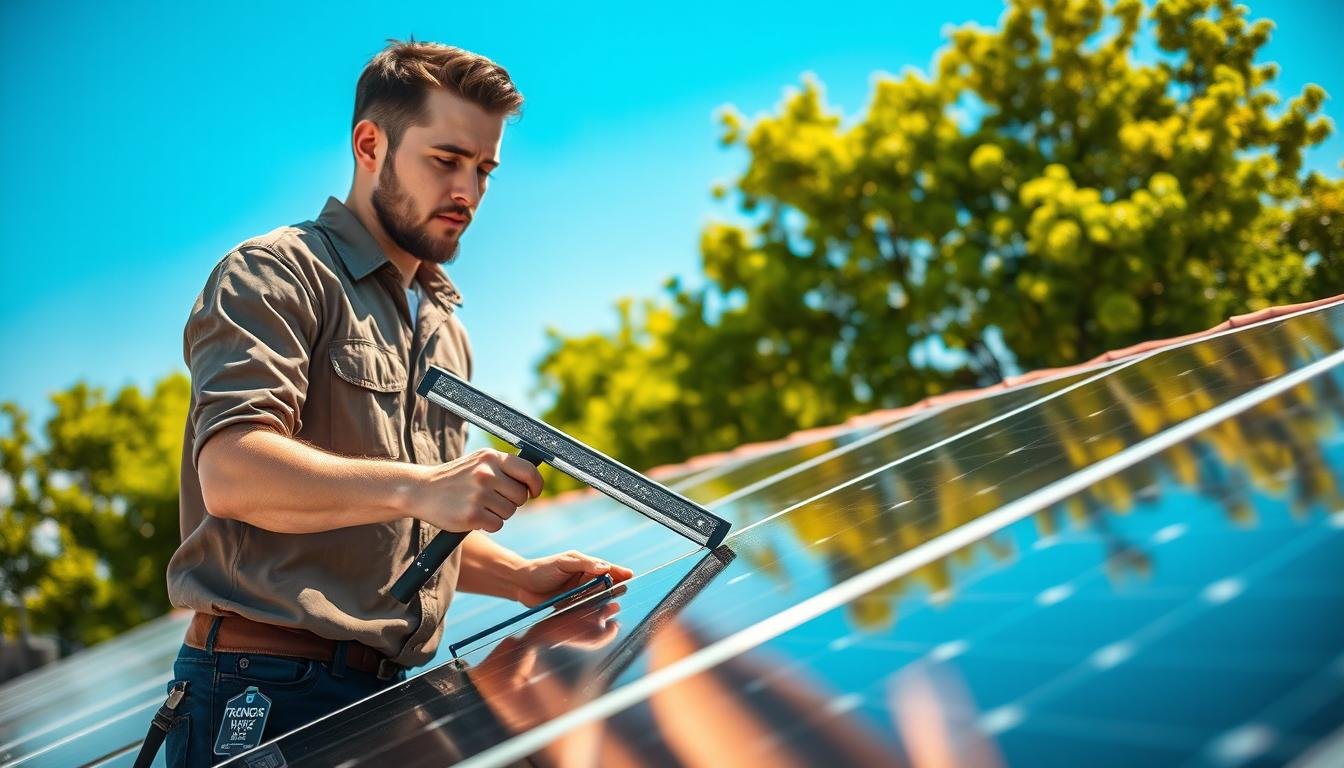
Solar panel cleaning service plays a crucial role in maintaining your system’s efficiency. But how often should you actually clean your solar panels? This guide explains everything you need to know.
Generally, plan for at least one to two maintenance visits a year to keep a residential solar panel array performing well. If you live in dusty or polluted areas, expect more frequent attention to avoid measurable energy loss.
Timing matters: heavy pollen seasons, stormy months, or long dry spells all affect when you should book professional panel cleaning. Solaris provides expert care across Florida, from Tampa to Orlando, so you can pick the best time for your property.
Table of Contents
Key Takeaways
- Clean at least once or twice yearly for most residential systems.
- Increase frequency in dusty or polluted locations to protect energy output.
- Schedule around local weather and seasonal pollen for best results.
- Work with an experienced team familiar with Florida conditions.
- Timely care helps avoid long-term degradation and lost savings.
Why Regular Maintenance Matters for Your Solar Investment
Neglecting routine upkeep can quietly shave years off your system’s return on investment. You invest in a high-quality array to cut costs and gain reliable power. Left unchecked, dirt and debris reduce output and raise monthly bills.
Regular maintenance keeps your hardware performing as designed. It prevents small issues from growing into expensive repairs. Even brief blockages cause measurable drops in energy and long-term performance loss.
Professional services remove grime that rain cannot. That restores rated output and reduces the risk of hot spots or warranty complications.
- Protects your investment by preserving energy yield.
- Helps maintain system efficiency and long-term performance.
- Reduces surprise increases in utility costs from lost generation.
| Issue | Effect | How Maintenance Helps |
|---|---|---|
| Surface buildup | Lower energy output | Targeted cleaning restores production |
| Localized damage | Reduced lifespan | Early detection prevents failures |
| Undetected faults | Higher bills | Routine checks catch issues early |
Factors Influencing Your Solar Panel Cleaning Schedule
Match your upkeep to the environment around your home. Coastal salt, heavy pollen, nearby construction and tree cover all change how quickly dirt and debris reduce output. You should tailor a plan that fits those risks.
Environmental Impact on Performance
Salt spray and humidity in places like Tampa and St. Petersburg accelerate buildup. Pollen and bird droppings also block sunlight and lower efficiency.
Recommendation: Inspect your panels every 6 months and schedule professional solar panel cleaning more often if you see staining or deposits.
Regional Weather Considerations
Rain alone won’t restore rated output. It often leaves mineral streaks that reduce performance and call for water-based solutions to remove them.
- Most manufacturers advise solar panel cleaning at least once or twice a year for a home system.
- Coastal and dusty areas need more frequent attention to protect output.
- Use proper equipment—incorrect tools can cause water intrusion and electrical damage to the system.
| Condition | Effect | Recommended Action |
|---|---|---|
| Coastal salt and humidity | Rapid film and corrosion risk | Inspect every 3–4 months; increase panel cleaning frequency |
| High pollen or dust | Reduced light transmission | Assess every 6 months; use specialized water-based solutions |
| Nearby trees or construction | Frequent debris and droppings | Schedule targeted maintenance after heavy activity |
The Risks of Neglecting Your Solar System
Ignoring routine upkeep leads to steady drops in your system’s output and growing monthly costs.
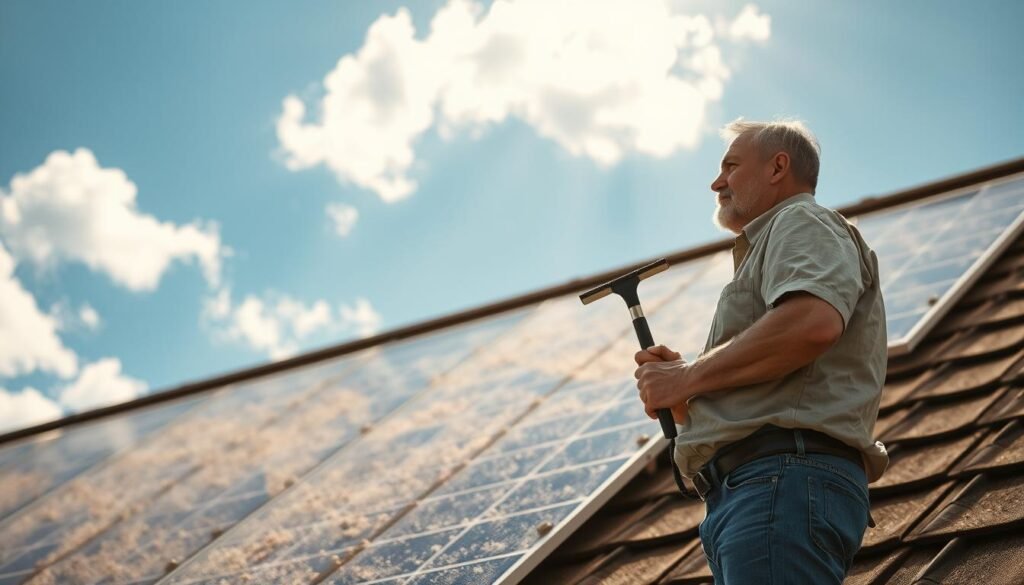
Dirt, grime, and bird droppings block sunlight and lower production. When panels stay dirty, they cannot convert as much energy as intended. That loss shows up on your electric bill.
Neglect also raises the chance of physical damage. Stubborn deposits can etch the glass and create hot spots that reduce lifespan. Some manufacturers require documented maintenance; missed care may void your warranty.
Impact on Energy Efficiency and Utility Bills
Reduced efficiency directly affects how much free electricity you get. A dusty solar panel array can lose several percent of production quickly.
- Accumulated dirt and debris cut light and lower energy output.
- Poor performance means measurable increases in monthly utility costs.
- Long-term buildup may cause permanent damage and jeopardize your warranty.
| Risk | Consequence | Action |
|---|---|---|
| Surface buildup | Lower daily production | Inspect and remove deposits promptly |
| Staining or etching | Permanent performance loss | Address with proper maintenance and repair |
| Ignored maintenance | Possible warranty denial | Keep records of routine checks and cleaning |
Choosing Between DIY Cleaning and a Professional Solar Panel Cleaning Service
Deciding whether to tackle upkeep yourself or hire pros comes down to risk, tools, and warranty rules.
DIY work can feel cheaper, but your array is delicate. Using household tools or pressure washers risks scratches, water intrusion, and electrical damage.
Those mistakes may void your warranty and harm your long-term investment. If you are not trained to work on roofs, you also face safety and liability issues.
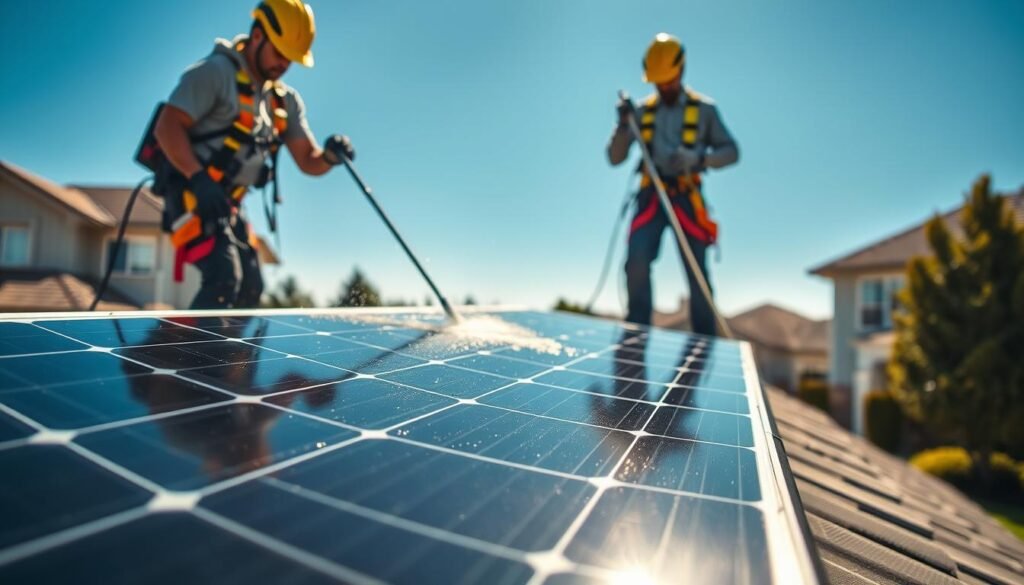
Hiring a professional protects your equipment. A trained team uses non-abrasive methods and follows the right cleaning process to avoid damage.
- Pros use soft tools and low-pressure rinse methods to protect glass and seals.
- They navigate wiring and roof access safely to reduce risk of accidents.
- We offer a free quote so you can compare the cost of a job versus the risk of DIY repairs.
When to hire pros: if your roof is steep, your system has warranty limits, or you spot stubborn dirt or staining that rain won’t remove.
Essential Safety Precautions for Roof Maintenance
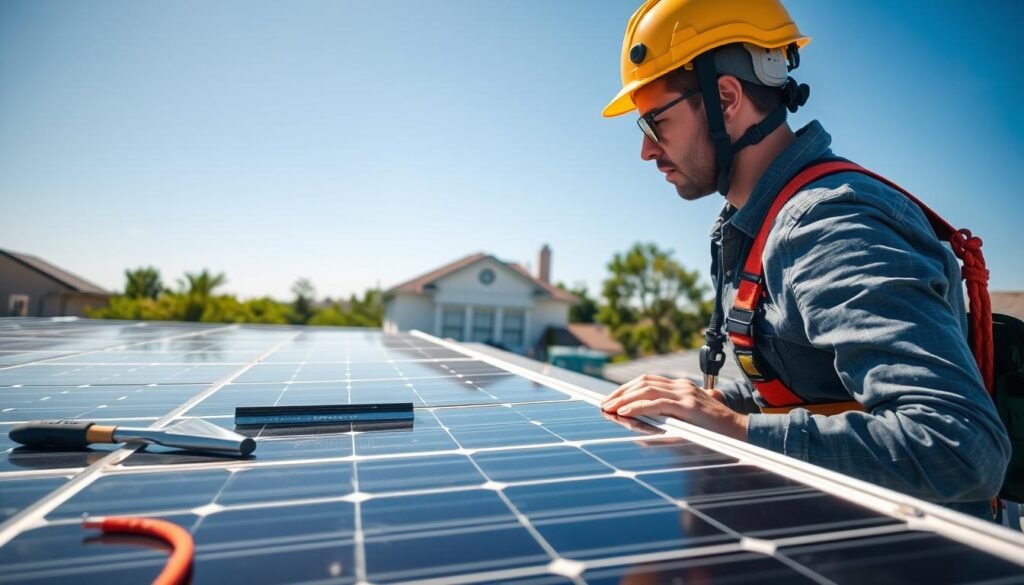
Safety must guide every step when you perform upkeep on rooftop equipment. Start with a clear plan and the right gear before you climb. A few precautions cut the risk of injury and avoid damage to your system.
Equipment Safety Standards
Use purpose-built fall protection and secure ladder setups. Professionals use gutter guards on ladders, safety straps, and high-visibility vests to prevent slips and keep the job visible.
Check equipment: inspect harnesses, anchor points, and ladders before you begin. Use water-safe techniques and soft tools to avoid harming glass or seals.
“Maintain gear to reduce hazards and preserve warranties.”
When to Call the Experts
Call a trained company when your roof is steep, wiring is exposed, or you lack fall protection. A qualified team performs a visual inspection during every visit to spot wear or early faults.
- High-risk roofs and complex arrays should only be handled by pros.
- Professional crews follow strict safety protocols and use eco-friendly agents and water techniques.
- Never attempt rooftop work without proper gear—injury and property damage are common when people skip precautions.
| Risk | Professional Equipment | Recommended Action |
|---|---|---|
| Steep roof | Safety harness, anchor points | Hire trained team; avoid DIY |
| Exposed wiring | Insulated tools, lockout procedures | Stop work and call experts |
| Slippery surfaces | Gutter guards on ladders, high-visibility vests | Use fall protection; schedule dry-day inspection |
Step by Step Guide to Cleaning Your Solar Panels
Start with a careful inspection and proceed with methods that protect glass and seals. You should begin by looking for loose debris, bird deposits, or visible damage.
- Inspection: Perform a close visual check of each array to spot chips, cracks, or heavy dirt.
- Secure access: Use stable ladders and fall protection before touching the roof or modules.
- Prepare equipment: Bring industry-grade rotating brushes and eco-friendly cleaning agents that won’t scratch surfaces.
- Gentle washing: Work panels with soft rotary brushes and low-pressure water to lift grime without harm.
- Rinse: Finish with purified water to prevent mineral streaks and preserve long-term efficiency.
- Final inspection: Confirm no damage and that electrical connections remain intact.
Typical job time: A residential visit takes less than two hours, so your energy production returns quickly.
| Step | Why it matters | Result |
|---|---|---|
| Inspection | Finds debris and damage | Protects warranty and output |
| Rotating brushes | Safe, effective dirt removal | Restores energy production |
| Purified rinse | Prevents mineral buildup | Improves long-term efficiency |
Follow this process to clean solar panels safely and avoid damage. A careful procedure helps protect your system and maximize energy output after every visit.
Understanding the Costs of Professional Maintenance
Knowing the true cost of professional upkeep helps you compare value, not just price.
Average professional solar panel cleaning in the U.S. typically runs between $100 and $300 for a standard residential setup. Larger systems and hard-to-reach roofs raise that range to $300–$600.
When to hire a pro: choose a company if your roof is steep, deposits are stubborn, or your warranty requires documented maintenance. Pros use safe tools that protect seals and electrical parts.
| Typical Job | Average Cost | Why Hire |
|---|---|---|
| Small residential system | $100–$300 | Quick ROI through restored production |
| Large or complex system | $300–$600+ | Safer access and thorough maintenance |
| Targeted spot work | $50–$150 | Removes stains that impact efficiency |
Cost vs. benefit: professional maintenance often pays for itself by raising energy production and protecting warranties. Contact us for a free quote—seasonal promotions and first-time discounts frequently lower the upfront cost.
- We provide transparent quotes so you know the full job cost.
- Regular maintenance preserves performance and prevents costly repairs.
Conclusion
Conclusion
Small, scheduled jobs pay back quickly by keeping energy production near rated levels. A routine of solar cleaning removes stubborn dirt and debris that rain won’t shift.
Keeping your array maintained helps you avoid lost output and protects your investment. Regular upkeep is a modest cost for a better long-term return on your system.
Ready to restore performance? Request a free quote and let our team show you how we safely clean solar panels and deliver a quality job. Contact us to learn the ideal schedule for your home and keep your clean panels producing at their best.
If you’re looking to improve your overall solar setup, you might also want to explore this portable solar generator for home for better energy efficiency.